24 Dec 2015

SHRINE - Utari Jinja Aichi

[ . BACK to DARUMA MUSEUM TOP . ]
. Shinto Shrine (jinja 神社) - Introduction .
:::::::::::::::::::::::::::::::::::::::::::::::::::::::::::::::::::::::::::::::::::::::::::::::::::::::::::::::::::::::::::::::::::::::::::::::::::::::::::::::::::::::::::::::::::::

Utari Jinja 莵足神社
豊川市小坂井町字宮脇2番地の1 / Miyawaki-2-1 Kozakaicho, Toyokawa, Aichi


- - - - - Deity in residence :


Unagami Sukune no Mikoto 菟上足尼命(うながみ すくねのみこと)
(Unakami (うなかみすくねのみこと)) Unakami-no-miko / 菟上王 Unakami no O


祭神の菟上足尼命(うなかみすくねのみこと)は、孝元天皇の末裔、葛城襲津彦命(かつらぎそつひこのみこと)四世の玄孫にあたり、雄略天皇の治世に穂の国(現在の東三河)国造に任ぜられたという。葛城襲津彦命は、仁徳天皇の皇后磐之姫媛命の父にあたり、大和国葛城の豪族として大きな権力を持っていたとされる。菟上足尼命は、没後、顕著な殖産、治民の功によって、三河国平井の柏木浜に奉斎され、天武天皇の治世、白鳳15年(686年)4月11日に、秦石勝(はたのいしかつ)により、現在地に遷座されたという。
貞観6年(864年)には、
神階が従五位下に進み、延喜式神名帳にもその名が見える。 明治維新の天皇東行の際には、勅使の参向を受けた。明治11年(1878年)には、有栖川宮熾仁親王御宸筆の社号軸を受けた。大正7年(1918年)には、郷社から県社に昇格した。
当初、平井の柏木浜に祀られていたが、天武天皇白鳳15年4月11日、現在地へ遷座した。

- Look at photos here:
- reference : wikipedia

..............................................................................................................................................


The Shrine crest 神紋 is usagi 兎 the hare.


shuin 朱印 stamp of the shrine


菟足神社志留倍 - 由緒
「昇格碑文」菟足神社は延喜式内の旧社にして祭神菟上足尼命は孝元天皇の御裔葛城襲津彦命(大和朝廷の名族)四世の御孫にませり。雄略天皇の御世穂の国の國造(東三河の国司に当る)に任けられ給ひて治民の功多かりしかば平井なる柏木濱に宮造して斎ひまつりしを天武天皇の白鳳十五年四月十一日(昭和五十二年より千二百九十一年前)神の御おしえのまにまに秦石勝をして今の処に移し祀らしめ給ひしなり。はやく正六位上の神階を授け給ひ貞観六年二月十九日従五位下に進められしが國内神名帳には正三位と記されたり(中略)。
徳川幕府の世となりて家康親しく参拝して神領(九十五石、制礼寄進)を寄せしより累代の将軍も其の例に倣ひ領主藩主等の尊敬の尋常ならざりしこと社記に詳なる所なり。
明治維新の初天皇御東幸のみぎり勅使をして幣帛を捧げしめ給ひしはいとも尊く、かしこき極にこそ(中略)。
斯る由緒ある神社(中略)なりしかば大正七年十一月二十二日県社に列せらるる事となりぬ(中略)。此の事の由を永遠に伝へむと大神に仕へ奉る社司川出直吉ぬしの請へるままに其の大むねを識すになむ。

菟足神社と徐福伝説
今から二千二百年ほど前、戦国の中国を統一した秦の始皇帝は、徐福から東方海上に蓬 莱など三つの神山があり、そこには不老不死の霊薬があるということを聞いた。そこで、 始皇帝はその霊薬を求めて来るよう徐福に命じ、三千人の童男童女と百工(多くの技術者) を連れ、蓬莱の島に向かわせた。しかし、出発してからのその後の徐福一行の動向はわか っていない。
ところが、わが国には徐福一行の渡来地といわれている所が二十余箇所もある。しかも、 わが小坂井町が徐福渡来地の一箇所として挙げられているのである。それは次のような菟 足神社に係わることからいわれるようになったと考えられている。
一 熊野に渡来した徐福一行は、この地方に移り住み、その子孫が秦氏を名乗っている。
・ 豊橋市日色野町には、「秦氏の先祖は、中国から熊野に渡来し、熊野からこの地方に来た」という言い伝えがある。
・ 牛窪記〔元禄十年(一六九七)頃成立〕には、「崇神天皇御宇二紀州手間戸之湊ヨリ徐氏古座侍郎泛舟、此国湊六本松ト云浜ニ来ル。…中略…徐福ガ孫古座郎三州ニ移リ来ル故ニ、本宮山下秦氏者多シ…」とある。
二 菟足神社の創設者は、「秦氏」ともいわれている。
菟足神社県社昇格記念碑(大正十一年十二月二十二日昇格)に、「菟足神社は延喜式内の旧社にして祭神菟上足尼命は…中略…雄略天皇の御世、穂の国造に任けられ給ひて治民の功多かりしかば平井なる柏木浜に宮造して斎ひまつりしを天武の白鳳十五年四月十一日神の御誨のままに秦石勝をして今の処に移し祀らしめ給ひしなり…」と記されている。
三 菟足神社には、昔から中国的な生贄神事が行われている。
古来菟足神社の祭事には、猪の生贄を供えていた。三河国の国司大江定基が、その生贄の残忍なありさまを見て出家し、唐に留学し寂照法師となったことが、「今昔物語」(平安後期)に書かれている。生贄神事には人身御供の伝説もあるが、現在では雀十二羽を供えている。
以上のほか、三河地方が古来から熊野地方とは海路による往来が行われ、熊野信仰の修 験者により熊野に伝わる徐福伝承が伝えられた。また、小坂井町が交通の要地で、東西を 往来する人達のなかからも徐福の故事が伝えられたとも考えられる。


omamori お守り amulets of the Shrine

- - - - - HP of the Shrine
- source : genbu.net/data/mikawa/utari -

..............................................................................................................................................

Kazamatsuri 風まつり Wind Festival
On the second Saturday and Sunday in April.


This festival is famous for its hand-held fireworks (手筒花火), normal fireworks and splendid festival floats.


.......................................................................


kazaguruma 風車 wind wheel
Kozakai kazaguruma 小坂井風車


CLICK for more wind wheel photos !

ema 絵馬 votive tablet with the wind wheel

Sold in the shrines as amulets for wind damage, especially at the shrine festivals in April.

..............................................................................................................................................

Shooki no men 鍾馗面 Mask of Shoki


The mask of Shoki is an amulet made during the time when famine, loss of the silk worms and other disasters hit the region around 1850.
Some villagers put the mask on and ran around, praying for help - and heaven sent help and a good harvest after all.
Now people wearing the mask take part in the festivals of this and other shrines in Takahashi.

. Shooki, Shōki 鍾馗 Shoki, The Demon Queller .

Other masks sold at this shrine to ward off evil influence are from
Tengu and Uzume (O-Kame).


. Aichi Folk Art - 愛知県  .

:::::::::::::::::::::::::::::::::::::::::::::::::::::::::::::::::::::::::::::::::::::::::::::::::::::::::::::::::::::::::::::::::::::::::::::::::::::::::::::::::::::::::::::::::::::

Utari Jinja Ta Matsuri 菟足神社田祭り - March - 3月12日

Held with prayers for a good harvest.


菟足神社の田祭りは、稲作の過程を模擬的に演じて稲の豊作を願う田遊びである。その起源はわからないが、その中で登場する昼食持(ひるまもち)の装束には「元禄14年(1701)正月調整」とある。
田祭りは、旧正月7日酉の刻(午後6時)からはじまり、拝殿に飾られた蓬莱山(ほうらいさん)飾りの前で宮司が祝詞をあげる。次に、水田に見立てた太鼓を庭に据え、太鼓の上に直径約30cmの丸くて平らな田地餅をのせる。作大将が昇殿して神前に進んで神意をうかがい、庭の作男に伝えると、太鼓を突くなど稲作のしぐさと唱えごとをしながら田打ちがはじまる。このとき長さ約70cmの柳の枝を、鍬や鎌に見立てる。田打ち、籾まき、苗代の鳥追い、苗代の草取り、馬の代かき、代ならし、苗うち、昼食持、田の草取り、稲刈り、稲数え、稲むらと続けて豊年を願う内容である。祢宜が作大将、氏子総代と保存会員が作男や妊婦姿の昼食持を演じる。
- source : pref.aichi.jp/kyoiku/bunka -

:::::::::::::::::::::::::::::::::::::::::::::::::::::::::::::::::::::::::::::::::::::::::::::::::::::::::::::::::::::::::::::::::::::::::::::::::::::::::::::::::::::::::::::::::::::

- Reference : 日本語

- Reference : English


. Shrine, Shinto Shrine (jinja 神社) - Introduction .

- #utarijinja -
:::::::::::::::::::::::::::::::::::::::::::::::::::::::::::::::::::::::::::::::::::::::::::::::::::::::::::::::::::::::::::::::::::::::::::::::::::::::::::::::::::::::::::::::::::::

[ . BACK to DARUMA MUSEUM TOP . ]
[ . BACK to WORLDKIGO . TOP . ]

:::::::::::::::::::::::::::::::::::::::::::::::::::::::::::::::::::::::::::::::::::::::::::::::::::::::::::::::::::::::::::::::::::::::::::::::::::::::::::::::::::::::::::::::::::::

--
Posted By Gabi Greve to Japan - Shrines and Temples on 12/22/2015 01:04:00 pm

EDO - Aomonocho District


[ . BACK to DARUMA MUSEUM TOP . ]
. Famous Places and Powerspots of Edo 江戸の名所 .
::::::::::::::::::::::::::::::::::::::::::::::::::::::::::::::::::::::::::::::::::::::::::::::::::::::::::::::::::::::::::::::::::::::::::::::::::::::::::::::::::::::::::::::::::::: 
Aomonochoo 青物町 Aomonocho "vegetable" district


After Tokugawa Ieyasu founded the town, many people came to work here and to feed them all was one of the great projects that had to be taken care of. For fresh vegetables, Ieyasu had a market set up with the help of

Soga Kozaemon 曽我小左衛門 / 曾我小左衛門
He had come from Odawara, Kanagawa and settled in the district near Nihonbashi and Yorozucho 萬町, which soon took the name of the Odawara original.

- quote
江戸へ行った小田原の『青物町』
- source : 田代道彌

To the North of Aomonocho was
Ikedai Yashiki 活鯛屋敷 
where the fish for Edo Castle were kept in ikesu 生洲 fish preserve ponds.

Soon other wholesalers came to live in Amonocho too, like tea merchants, soy sauce merchants, dried foods merchants and even incense stick merchants and many more
問屋が多く、定飛脚問屋、乾物問屋、茶問屋、紙煙草入問屋、鍋釜問屋、干菓子問屋、薬屋、筆墨硯師、醤油酢問屋など . . .
Near the wholesalers, smaller vegetable shops also set up business.

Most of this area got lost and parts of it are now reconstructed and excarvated from the ruins.

aomono-tori 青物取り taking green things,
is still a common word for collecting sansai 山菜 mountain vegetables in spring.

:::::::::::::::::::::::::::::::::::::::::::::::::::::::::::::::::::::::::::::::::::::::::::::::::::::::::::::::::::::::::::::::::::::::::::::::::::::::::::::::::::::::::::::::::::::

Edo no Aomono Ichiba 江戸の青物市場 Vegetable Markets in Edo
In the "three vegetable district" 青物三ケ町 Aomono Sangamachi in Kanda
Tachō, 多町 Tacho - 連雀町 Renjakucho - 永富町 Eifukucho

From there street vendors would take off every day.


aomono uri 青物売り vegetable vendor

正徳4年(1714)から幕府御用となり、享保10年(1725)には、問屋は94人も居たというのです。
- source : edosanpo.blog109 -

:::::::::::::::::::::::::::::::::::::::::::::::::::::::::::::::::::::::::::::::::::::::::::::::::::::::::::::::::::::::::::::::::::::::::::::::::::::::::::::::::::::::::::::::::::::

There are other districts in Japan with this name.


..............................................................................................................................................
神奈川県 Kanagawa 小田原 Odawara


Aomonocho Shotengai 商店街  Shopping Street


..............................................................................................................................................
岩手県 Iwate, 盛岡市 Morioka


The district used to be called 仙北町新小路 Senboku and was re-named to Aomonocho in 1812. It is the district in front of the shrine 駒形神社 Komagata Jinja.


The 明治橋 Meiji Bridge of Aomonocho

.......................................................................

. Kappa legends from Iwate 河童 / かっぱ / カッパ .

カッパ Kappa and Sumo wrestler 七つ瀧 Nanatsu-Taki (Seven Waterfalls)
At 青物町 Aomonocho there lived a former Sumo wrestler, he now dealt with horses (bakuroo バクロウ). Once he went to the river with a horse, where he met a Kappa. The Kappa wanted to pull the horse into the water, but the strong Nanatsutaki pulled him out with ease. The Kappa apologized and promised never to pull humans into the water again.
He promised to stay off from 明神淵 Myojin-Fuchi to 御舟小屋 Ofune-Koya. And all other Kappa would also respect this promise.
Since this day, no fatal water accidents happened there and people now bring offerings to the local shrine festival

:::::::::::::::::::::::::::::::::::::::::::::::::::::::::::::::::::::::::::::::::::::::::::::::::::::::::::::::::::::::::::::::::::::::::::::::::::::::::::::::::::::::::::::::::::::

- - - - -  H A I K U  - - - - -

青物を買ふ女房の袷かな
aomono o kau nyoobo no awase kana

the summer robe
of my wife buying
vegetables . . .


貧乏な青物店や夏大根
binboo na aomonoten ya natsu daikon

this poor
vegetable shop -
Daikon in summer


. Kawahigashi Hekigoto 河東碧梧桐 .


. daikon 大根 Radish, Reddish, Raphanus sativas .

..............................................................................................................................................


春風や青物市の跡広し
harukaze ya aomono ichi no ato hiroshi

spring wind -
the remains of the vegetable market
are quite large


at Senju 千住 in Tokyo

こほろぎや青物市のこぼれ菜に
koorogi ya aomono ichi no koboreha ni

this cricket -
it sits on a fallen leaf
at the vegetable market


. Masaoka Shiki 正岡子規 .


. koorogi 蟋蟀 cricket, Gampsocleis buergeri .
- kigo for autumn -

..............................................................................................................................................

そらまめ剥く祭の路地の青物屋
野澤節子

はつゆきや青物市のよめがはぎ
高井几董

大根干す青物市場のフエンスにも
五十嵐波津子

打水を店の中まで青物屋
中田勘一

朝寒や青物洗ふ高瀬川
村上霽月

青物に涼しき月の巷かな
尾崎紅葉

青物を軒に培ひ長屋夏
石塚友二

魚屋に青物売つて小鳥来る
石川桂郎

:::::::::::::::::::::::::::::::::::::::::::::::::::::::::::::::::::::::::::::::::::::::::::::::::::::::::::::::::::::::::::::::::::::::::::::::::::::::::::::::::::::::::::::::::::::


- - - To join me on facebook, click the image !

:::::::::::::::::::::::::::::::::::::::::::::::::::::::::::::::::::::::::::::::::::::::::::::::::::::::::::::::::::::::::::::::::::::::::::::::::::::::::::::::::::::::::::::::::::::

. Famous Places and Powerspots of Edo 江戸の名所 .

. Doing Business in Edo - 商売 - Introduction .

. shokunin 職人 craftsman, craftsmen, artisan, Handwerker .

. Legends and Tales from Japan 伝説 - Introduction .


[ . BACK to DARUMA MUSEUM TOP . ]
[ . BACK to WORLDKIGO . TOP . ]- - - - - #aomonocho - - - -
::::::::::::::::::::::::::::::::::::::::::::::::::::::::::::::::::::::::::::::::::::::::::::::::::::::::::::::::::::::::::::::::::::::::::::::::::::::::::::::::::::::::::::::::::::

--
Posted By Gabi Greve to Edo - the EDOPEDIA - on 12/23/2015 10:45:00 am

19 Dec 2015

EDO - niwashi, uekiya - gardeners

http://darumamuseumgallery.blogspot.jp/2007/05/japanese-gardens.html

::::::::::::::::::::::::::::::::::::::::::::::::::::::::::::::::::::::::::::::::::::::::::::::::::::::::::::::::::::::::::

. Edo craftsmen 江戸の職人 Edo no shokunin .


uekiya 植木屋, niwashi 庭師 gardener
There were various types of specialist in Edo.

hachimono shi 鉢物師 making potted plants, like Bonsai
naemono shi 苗物師 making plants growing from seeds or pruning
uekiya 植木屋 caring for trees in the parks and gardens

Uekiya and niwashi are terms for professional gardeners; the former was coined in the Edo period and the latter in the Meiji period.
(Sakuteiki)

"The origin of the term niwashi has not been pinned down very accurately. . . . "
Japanese Garden Design
Read Marc Keane :
- source : books.google.co.jp -


"Edo saw the rise of the niwashi or the professional garden maker who would eventually replace the role of the traditional designers . . . "
Sound Worlds of Japanese Gardens:
Read Michael D. Fowler :
- source : books.google.co.jp -


- quote -
Kentei 賢庭
Dates of birth and death unknown.
A gardener (niwashi) from the Azuchi-Momoyama to the beginning of the Edo periods (late sixteenth to early seventeenth centuries). He was involved in building the garden at Sanpōin of Daigoji temple, under the supervision of head priest Gien Jugō.
- source : Japanese Garden Dictionary -

.......................................................................


- quote -
Somei 染井 in Edo
the Somei area -- a general name given to a cluster of small towns and villages that specialize in growing ornamental plants and trees to plant in the gardens of all the wealthy daimyo in Edo. The two main towns in this area are Komagome and Sugamo, but most people in Edo know the area as "Somei" and the farmers who live in the region are known as the Somei uekiya (the landscape gardeners of Somei). They get their reputation from their great skill in raising thousands of different types of ornamental plants. The farms in the Somei area produce most of the ornamental plants that the daimyo plant in their gardens, and many flower markets are held in the small towns along the Nakasendo, where common people can also buy flowers, trees and shrubs. In fact, even the beautiful gardens inside Edo Castle are landscaped and tended by gardeners from Somei.

Gardening is one of the most common and most universal hobbies in Edo. Although the daimyo spend lots of money to build large and extensive gardens, even the poorest city dweller can raise flowers and small shrubs along the roadside or on their balcony, because all it takes is a pot, some dirt and a few seeds or cuttings. Since poor city dwellers have only a limited amount of land for growing plants, one popular hobby of lower-class people is bonsai . A bonsai tree is planted in a small pot and carefully trimmed to keep it from growing too big. If the grower does a good job of tending the tree, in ten years or so he will have a miniature bonsai tree, that looks exactly like a full-sized tree, but is only about a foot tall! Although Edo is a very crowded city, it is quite beautiful. In even the most crowded downtown neighborhoods, you can always see beautiful and well-tended flowers, shrubs and bonsai trees in almost everyone's front yard or doorstep. However, nothing can quite compare to the sight of Somei, with its endless acres of bushes, flowers and trees of every type imaginable.


Somei is the home of one of the most famous gardeners in Edo: Ihei Masatake. Masatake is the son of perhaps the greatest landscape gardener ever -- Ihei Sannojo, and many believe that Masatake is as good at actual gardening as his famous father. The Ihei family first got into the landscaping business back in the early days after Edo was founded. Masatake's grandfather was a simple farmer in the northern suburbs of Edo. Back then, most of the farms in the area grew only rice and vegetables for sale in the city, though a lot of farmers supplemented their income by working part time as gardeners and handymen at the estates of daimyo who lived nearby.

Ihei Masatake's grandfather was named Hotsukimaru. Since he was just a poor farmer, he did not have a last name. In Edo, most of the low-class people do not have a surname, because surnames are a sign of respect, and only fairly important people are allowed to have one. Hotsukimaru got a job working as a gardener and handyman at the estate of the Todo family, who were the rulers of Tsu province, in southern Japan. When Hotsukimaru was still a young man one member of the family, Todo Ihei, brought back some azalea bushes from his home in Tsu province and asked Hotsukimaru to plant them in the garden. The azaleas from southern Japan were more colorful than any Hotsukimaru had ever seen before, so he took cuttings home to his farm and carefully raised the bushes around his house. He soon discovered that if he carefully bred different plants together, the colors of the flowers were slightly different. After carefully tending the azaleas for about ten years, he had bred some beautiful varieties of different azalea, including purple, red, and even white varieties. After several years, when the new bushes had grown big enough, he brought these new varieties back to the Todo family estate and planted some in the gardens. When he saw them, Todo Ihei was amazed! He thought the bushes were so beautiful that he immediately appointed Hotsukimaru the head of all gardeners on the estate, and urged him to continue working to try to develop new varieties.

To show how pleased he was with the new types of azaleas, Todo Ihei asked the Shogun to let Hotsukimaru use a family name. When the Shogun saw the beautiful flowers, he agreed, as long as Hotsukimaru promised to grow some azaleas to plant in the gardens at Edo Castle. Hotsukimaru felt deep gratitude for his master. Once he got a last name, he would no longer be just a poor farmer -- he would be somebody important. To show his gratitude, he asked if he could take the name Ihei as his family name (so he would be named after his master). Todo Ihei agreed, and from that day on, everyone in the area knew of the gardener Ihei Hotsukimaru.

Ihei Hotsukimaru's son, Sannojo grew up on the Todo estate, and worked with his father in the gardens. More and more daimyo in the area started planting large and elaborate gardens ,so they could show off to their neighbors. As the demand for gardeners increased, Hotsukimaru and Sannojo set up a family landscaping business. Although many other farmers in the area also began doing landscape work at the daimyos' estates, the Ihei family was the most famous. All the daimyo wanted to have their landscaping done by the Ihei ueki-ya (the Ihei landcaping company).

Sannojo learned all about azaleas from his father, but he could see that there was a strong demand for all sorts of flowering trees and bushes. He started to study every type of flowering tree and bush he could find, and planted many different varieties on his farm in Komagome. By the time Sannojo was thirty, he had developed several new varieties of ume (plum trees) and sakura (cherry trees). Since the new types were more colorful and had more flowers, all the daimyo wanted to buy them for their gardens, so they could show off to their friends. Sannojo became very wealthy selling the new types of cherry trees, plum trees, azaleas and other flowering bushes. When they saw how succesful the Ihei family had become, most of the other farmers in the area stopped growing rice and began raising ornamental plants instead.

By the time Masatake was born, Somei was the center of a huge landscaping business. From the time he was a little boy, every hour of the day he spent doing landscape work for rich daimyos, or trying to breed new varieties of flowers. The demand for trees and shrubs to plant in the elaborate gardens of Edo provides work for hundreds of farmers, and the convenient location of the Somei area -- on the main road leading into the suburbs where all the daimyo live -- makes it the "flower and garden center" of the entire country.

Naturally, every daimyo wants to have the most unique plants in their garden, so they can show off to the other daimyo . Therefore, the Somei uekiya (landscape gardeners of Somei) search far and wide for new varieties of plants. Not only do they try to breed new varieties of popular flowers; they also search in the forests for new species that might make good ornamental plants. They even import seeds and cuttings from countries far, far away.


In 1695, Ihei Sannojo published a best-selling book on gardening that gave information on over 2000 different types of plants, including varieties from as far away as Africa and South America.
- source : edomatsu/somei 染井 -


- quote -
江戸の植木屋 その1
植木屋の成立と伊藤伊兵衛 Ito Ihei
三之烝(三代伊兵衛)Sannojo (Ihei third generation)
- 植木屋の種類 - Types of Uekiya
Places were many Uekiya lived in Edo:
巣鴨 Sugamo、染井 Somei、駒込 Komagome、小石川 Koishikawa、千駄木、田畑、根岸、三河島、本所、向島、亀井戸、また四谷、赤坂、青山、麻布、芝、目黒 and more
- source : koichiro1945 -

.......................................................................


Snow Viewing at Mokubo-ji Temple: the Uekiya Restaurant
木母寺雪見 植木屋 ー 江戸高名会亭尽
Utagawa Hiroshige

.......................................................................

植木屋の無口めでたし松落葉
uekiya no mukuchi medetashi matsu ochiba

this gardener
is really not talkative -
pine needles falling


Ishikawa Keiroo 石川桂郎 Ishikawa Keiro (1909 - 1975)
Haiku poet from Tokyo

- - - - - MANY Haiku about uekiya 植木屋 and niwashi 庭師
- source : haikureikudb -

:::::::::::::::::::::::::::::::::::::::::::::::::::::::::::::::::::::::::::::::::::::::::::::::::::::::::::::::::::::::::::

18 Dec 2015

GOKURAKU - Binbogami

http://darumamuseumgallery.blogspot.jp/2008/01/god-of-poverty.html

:::::::::::::::::::::::::::::::::::::::::::::::::::::::::::::::::::::::::::::::::::::::::::::::::::::

God of Poverty, Bimbogami, Binboo Gami
貧乏神
bimbô kami, bimbogami, bimboogami bimbo kami


The God of Poverty was quite common in the Edo period. He was a filthy old man, with a long beard and wearing rags. He would stick to a home and make its inhabitants poor. So better not even try to get rid of him, although there are some special rituals to try and throw him out of your life.
Some people threw dry beans at him. Some used the bamboo for blowing on the kitchen fire, stuck a coin in it and threw this into a nearby river ... hoping the God of Poverty would follow it there and leave the house.

The God of Poverty is also known in Chinese legends as the son of Zhuan Xu, who was himself a grandson of the Yellow Emperor.

There is also a good of bad fortune and disease, Yakubyogami (yakubyoogami 疫病神).

Gabi Greve

:::::::::::::::::::::::::::::::::::::::::::::::::::::::::::::::::::::::::::::::::::::::::::::::::::::

- - - The three deities most feared in Japan:

. Shinigami 死神 God of Death "Grim Reaper" .

. Binbogami, Binboo Gami 貧乏神 Bimbogami, God of Poverty .

. Yakubyoogami 疫病神 Yakubyogami, Deity of Diseases .

:::::::::::::::::::::::::::::::::::::::::::::::::::::::::::::::::::::::::::::::::::::::::::::::::::::


Shrines for the God of Poverty
Binbogami Jinja 貧乏神神社


:::::::::::::::::::::::::::::::::::::::::::::::::::::::::::::::::::::::::::::::::::::::::::::::::::::

. shinbutsu in Edo 江戸の神仏 Kami and Hotoke in Edo .

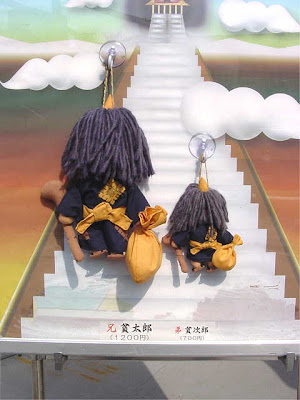
Shrine at Kameido, Tokyo

Poverty Brothers Bin-Taroo and Bin-Jiroo
貧兄弟 貧太郎&貧次郎

CLICK for original LINK

CLICK for more photos !
© tencoo.fc2web.com

.......................................................................


Oota Jinj,、Ōta Jinja  太田神社 Ota Jinja
(in the compound of Kitano Jinja / 牛天神 Ushi Tenjin )
Tōkyō-to, Ōta-ku, Chūō, 6 Chome−3 太田神社

Once there lived a poor Samurai in the area who never managed to save some money and live well. One night in a dream an old woman showed up:
"I am the Binbogami who lived in your house for a long time. Now I found a home which is much better, so I will move out. I want to show you my gratitude and will bring you some good luck.
But you have to make offerings on the first, 15th and 25th of every month, bringing red ritual rice and Abura-age Tofu. And eon't you forget that!"
The man did as told and became rich, building a small sanctuary to pray to the deity on the three days he was told.
A carpenter later offered to build a beautiful shrine and he also got riches.
福の神になった貧乏神 Fuku no Kami ni natta Binbogami
It seems the Binbogami of Ota Jinja turned into a Deity to bring good luck, Fuku no Kami, after all.
A memory statue of this event is kept in the Shrine - or so they say.


太田神社 - 高木神社 Takagi Jinja
The Binbogami of this shrine is
Kuroyami Tennyo 黒闇天女(くろやみてんにょ)
Lady Ten Deity of the Darkness

A sister of Benzaiten 弁財天の姉 (other sources quote 吉祥天 Kichijoten).


- HP of the Shrine
- source : ushitenjin.jp -


Kuroyami Ten 黒闇天 (こくあんてん) Kokuan Ten
黒闇女、黒夜天、暗夜天、黒夜神
"黒耳"(こくに、KalakarNi) Kokuni - Kuroanten / Kuroyamiten
- - - More in the WIKIPEDIA !


. Tenbu 天部 the Devas of India .

:::::::::::::::::::::::::::::::::::::::::::::::::::::::::::::::::::::::::::::::::::::::::::::::::::::

haiku

. . .

HEIAN - amazake sweet rice drink legends


- BACK to the Daruma Museum -
. Japanese legends and tales 伝説 民話 昔話 - Introduction .
::::::::::::::::::::::::::::::::::::::::::::::::::::::::::::::::::::::::::::::::::::::::::::::::::::::::::::::::::::::::::::::::::::::::::::::::::::::::::::::::::::::::::::::

amazake densetsu 甘酒と伝説 legends about Amazake "sweet rice wine"

amazake, ama zake 甘酒 (あまざけ, 醴 ) amai sake
sweet alcoholic drink made from fermented rice
sake 酒 is usually an alcoholic drink, but Amazake is without alcohol and therefore loved by women and children. On cold days it is warmed up and thus a special treat.


"over night drink", hitoyazake 一夜酒(ひとよざけ)
vendor of sweet ama zake, amazake uri 甘酒売(あまざけうり)
shop selling sweet ama zake, amazakeya 甘酒屋(あまざけや)

The basic recipe for amazake has been used for hundreds of years. Kōji is added to cooled whole grain rice causing enzymes to break down the carbohydrates into simpler unrefined sugars. As the mixture incubates, sweetness develops naturally.
- snip -
amazake uri 甘酒売り vendor of Amazake in Edo
- MORE
. Japanese Drinks for all seasons .
- Introduction -


::::::::::::::::::::::::::::::::::::::::::::::::::::::::::::::::::::::::::::::::::::::::::::::::::::::::::::::::::::::::::::::::::::::::::::::::::::::::::::::::::::::::::::::

Various regions have legends about an old mountain woman (hag) who likes Amazake or comes to sell Amazake.

山姥 Yamanba,鬼婆 Onibaba

牛方山姥の昔話は牛方もしくは馬方、魚売が山姥もしくは鬼、山男、鬼婆に荷や牛を食われ、隠れた一軒家の天井裏に隠れていると山姥が入ってきて餅を焼いているのを牛方が天井から棒で突いて食べ、山姥が沸かした甘酒も飲んでしまう。そして山姥は釜もしくは唐櫃、風呂釜の中で山姥が寝たところに熱湯を入れるか、下から火をたいて煮殺すというものである。

牛方が塩鯖を運んでいるときに山姥に襲われ、鯖も牛も食われてしまう。牛方は木に登って隠れていたが、その姿が沼に映っていた。その姿めがけ、山姥は沼夜涛に飛び込んだので、牛方はその間に逃げて、一軒家に隠れた。そこは山姥の家で、牛方は山姥の餅や甘酒を飲んでしまったが、山姥はそれを火の神の仕業と思い、唐櫃の中で寝た。山姥は牛飼いが錐で蓋に穴をあける音を聞いて「明日は天気だけで、きりきり虫が鳴かあや」といいながら殺された。

..............................................................................................................................................

amazake babaa 甘酒婆 Amazake hag
She comes in various versions.

amazake babaa yokai 妖怪 甘酒婆 as a Yokai monster


source : blogs.yahoo.co.jp/tengoqu

Amazake-babaa 甘酒婆 "Amazake hag" is an old woman yokai from the folklore of Miyagi and Aomori.
She comes to the doors of houses at late night asking for amazake in a child like voice, but if anyone answers they fall ill. It was said that to keep her away, a cedar leaf is placed in the doorway.

..............................................................................................................................................

甘酒婆地蔵尊 Amazake Baba Jizo


source : fank10jasu/archives

甘酒婆地蔵尊 Amazake Baba Jizo
東京都文京区小日向 - Nichirin-Ji Tokyo 日輪寺

The Jizo statue of this temple is modelled like the old woman who sold Amazake at the access road to the temple.
She was suffering from a severe cough and made a wish:
"After my death I wand to become a Deity to cure Cough 咳の神 and help healing all the other people with this ailment."
So a statue was made of the woman but seen as a Jizo statue.

There is also a statue of Fudo Myo-O at her side:


::::::::::::::::::::::::::::::::::::::::::::::::::::::::::::::::::::::::::::::::::::::::::::::::::::::::::::::::::::::::::::::::::::::::::::::::::::::::::::::::::::::::::::::
- - - - - ABC List of the prefectures :

.................................................................. Aomori 青森県 ....................................................................

. hoosoogami 疱瘡の神 deity of smallpox .
and amazake babaa 甘酒婆 Amazake hag


.................................................................. Chiba 千葉県 ....................................................................
成田市 Narita

January 24 is the festival of Atago Gongen. Therefore every month on the 24 people abstain from using Sake, vinegar or Amazake, because this deity does not like them.

. Atago Gongen 愛宕権現 .
avatar (Gongen) of Buddhist bodhisattva Jizo Bosatsu


.................................................................. Fukuoka 福岡県 ....................................................................
久留米市 Kurume

gama, kuudo 蟇,クワド
蟇のことをこの地方ではワクドと言うが、これは殺した者にすぐ憑いたり祟ったりする。蟇に憑かれると耳をくすぐられ、あるいは耳の中に入って甘酒を醸される。特に白い荒神さんの蟇であると目や耳を不自由にされる。頭の毛をむしり取るものもあって、蟇に憑かれた者は蟇の形になって死ぬ。


.................................................................. Miyagi 宮城県 ....................................................................
大和町 Taiwa

. amazake Jizoo 甘酒地蔵 Jizo and sweet rice wine .


amazake baba 甘酒婆 Amazake Hag
She knocks at the door of houses at midnight, asking for Amazake in the voice of a child, but if anyone answers, they become ill. To keep her away, a cedar leaf is hung in the doorway.


.................................................................. Niigata 新潟県 ....................................................................
Sado, 相川町 Aikawa

Chinju Kitano Jinja no Saijin Tenjin 鎮守北野神社の祭神天神
The festival for the Protector Deity at the Kitano Jinja is on September 25. Tenjin Sama leaves early for Izumo to meet with the Deities of Japan and to help making Sake. So people offer Amazake and 赤飯 Red Ritual Rice on this day.

. Sugawara Michizane 菅原道真 天神 Tenjin Legends .

.......................................................................
onibaba 鬼婆 Onibaba, the Demon Hag
Once upon a time
grandfather went to town to sell some things. In the mountains he met Onibaba, who took away all his luggage.
The next day he went there again and brought her rice cakes and Amazake. After she had eaten them, she fell into hot water and he killed her. So he could take revenge on this enemy.


.................................................................. Okayama 岡山県 ....................................................................
真庭郡 Maniwa

mikogami ミコ神 / 御子神 Honorable Child Deity
The Mikogami of Okayama like Amazake, therefore people bring offerings to their shrines every time they prepare some.
If she is of bad temper for some reason, she can cause wounds and other diseases for the children. To appease her, people bring Amazake to the shrine.

.......................................................................
川上村 Kawakami

mikogami ミコ神さん
ミコ神さんは納戸にいる神様で、奥に棚をしてお宮を祀り、中に幣を入れてある。女の安産、月忌を守る。甘酒を供える。月の13日が縁日で、正月には他の神様と同じように飾りつけをする。祀り方が悪いと、機嫌を悪くして出ものを出す。出ものが出たときには他の家に移りたがっているといい、法印さんに拝んでもらって幣だけを移す。祭りをきちんとしていれば家にいてもらえる。

.......................................................................
美甘村 Mikamo

ooyama mikogami オオヤマミコ神
in Mikamo village, Kuroda Jinja 黒田神社 Shrine.
美甘村美甘の入夏家は現在黒田神社の神主である。ミコ神は女の神で子供を好む。2階に祀ってある。オオヤマミコ神と呼び、旧11月13日が祭日で、甘酒を作り子供に飲ませるが、ミコ神には飲ませない。当日一番早くミコ神に参った子供は願い事がかなうという。近所の子供にできものができた時にはオオヤマミコ神を拝みに来る。


. mikogami 御子神 Honorable Child Deity .


.................................................................. Shizuoka 静岡県 ....................................................................
Hamamatsu, 龍山町 Tatsuyama

- Some local customs, some refere to the Asian zodiac:
It is not allowed to grow nuts or grapes in the garden.
Miso should not be made on u no hi 卯の日, the day of the rabbit (hare).
Amazake should not be made on tatsu no hi 辰の日, the day of the dragon.


.................................................................. Yamanashi 山梨県 ....................................................................

amazake banbaa アマザケバンバァ Amazake hag
She comes to the village late every night, knocks at the doors and wants to sell Amazake or real Sake. So many people put a poster at their kitchen door, saying they do not like these drinks.
Then she will stop visiting.

::::::::::::::::::::::::::::::::::::::::::::::::::::::::::::::::::::::::::::::::::::::::::::::::::::::::::::::::::::::::::::::::::::::::::::::::::::::::::::::::::::::::::::::

- reference : nichibun yokai database 妖怪データベース -


..............................................................................................................................................


. Japanese legends and tales 伝説 民話 昔話 - Introduction .

- Yookai 妖怪 Yokai Monsters of Japan -
- Introduction -

::::::::::::::::::::::::::::::::::::::::::::::::::::::::::::::::::::::::::::::::::::::::::::::::::::::::::::::::::::::::::::::::::::::::::::::::::::::::::::::::::::::::::::::


. Join the friends on Facebook ! .

- #amazake #sweetricewine #amazakebaa -
::::::::::::::::::::::::::::::::::::::::::::::::::::::::::::::::::::::::::::::::::::::::::::::::::::::::::::::::::::::::::::::::::::::::::::::::::::::::::::::::::::::::::::::

[ . BACK to DARUMA MUSEUM TOP . ]
[ . BACK to WORLDKIGO . TOP . ]

::::::::::::::::::::::::::::::::::::::::::::::::::::::::::::::::::::::::::::::::::::::::::::::::::::::::::::::::::::::::::::::::::::::::::::::::::::::::::::::::::::::::::::::

--
Posted By Gabi Greve to Heian Period Japan on 12/16/2015 02:27:00 pm

16 Dec 2015

TEMPLE - Ryugeji Dragon Flower Temples


[ . BACK to DARUMA MUSEUM TOP . ]
. Dragon temples of Japan .
::::::::::::::::::::::::::::::::::::::::::::::::::::::::::::::::::::::::::::::::::::::::::::::::::::::::::::::::::::::::::::::::::::::::::::::::::::::::::::::::::::::::::::::

Ryuugeji 龍華寺 (竜花寺) Ryuge-Ji "Dragon Flower Temple", Shizuoka
観富山 Kanpuzan 龍華寺
Fujimidera 富士見寺 "Temple to view Mount Fuji"


Ryugeji - A temple with a great view ! "眺望の良い寺"


静岡市清水区村松2085 / 2085 Muramatsu, Shimizu Ward, Shizuoka

Established in 1670 by 日近 Priest Nisshin, a nephew of お万の方 Lady O-Man no Kata, see below.
Her sons (their father was Tokugawa Ieyasu) made generous donations to this temple.


The park 観富園 Kanpu-En is in a Shumisan-style (池泉観賞式), where you can imagine that the room is Mount Fuji, the small mountain is Mount Udo and the pond is Suruga Bay.
Kiyomigata 清見潟 is also visible from the temple.
This park is one of the most famous in the 東海 Tokai region.

The large sotetsu 大ソテツ cycad trees in the garden have been certified as a national natural treasure.


- quote
"The Garden with the Splash of a Frog"
This temple is best known by the cycads 1,100 years old and the oldest in Japan. And its garden Kampuen (Mt Fuji viewing garden) is nice.
This temple is a Nichiren Buddhism temple and in its main building the life of Nichiren one of the most popular 13th century priests is well illustrated. Nichiren is one of the five historical figures Kanzo Uchimura picked as representative Japanese in his book "Japan and the Japanese" .
高山樗牛 Chogyu Takayama is one of the Meiji Period intellectuals who was inspired by Nichiren's teachings and was buried there. The treasure trove of the temple called Chogyukan has wide variety of treasures with historical interests including various gohonzon (the object of worship) of Nichiren Buddhism.
These mandalas are made up of squiggly kanji characters of Hindu gods and Shinto gods and native gods.
- source : tripadvisor.co.nz


..............................................................................................................................................


鬼子母神(徳川家家紋入り) Kishiboshin
祖師堂天井 with wonderful ceiling paintings

- and more
- Homepage of the temple
- source : ryugeji.jp/annai


Yakuyoke Fudo 厄除け不動尊 Fudo to ward off evil influence

..............................................................................................................................................


Yoojuuin 養珠院 お万の方 Yoju-In O-Man no Kata
(?1577 / ?1580 - 1653) Omannokata, Oman no Kata, Oman-no-kata, O Man no kata

She was the daughter of 正木頼忠 Masaki Yoritada, Lord of 勝浦 Katsuura Castle in Chiba.

She became the concubine of 徳川家康の側室 Tokugawa Ieyasu when she was 17.
Mother of 徳川頼宣 Tokugawa Yorinobu (1602 - 1671) of the Kii Tokugawa family 紀伊徳川家
Mother of 徳川頼房 Tokugawa Yorifusa (1603 - 1661) of the the Mito Tokugawa family 水戸徳川家
(so she is the grandmother of the famous Mito Mitsukuni / Mito Komon 水戸光圀(水戸黄門).

.......................................................................

Shichimenzan, Shichimensan 七面山 Mount Shichimen
- and
. O-Man no Kata お万の方 .

.......................................................................


Statue at Hachimansaki Park, Chiba, Katsuura 八幡岬公園


- quote -
Tamazawa Myohokkeji Temple
This Temple can be found in the nature of Mt. Hakone, far from Mishima downtown.
At first,
it was built at Kamakura during Kamakura period by Nissho-shonin. He is famous for establishing a disciple of Nichiren sect. In Edo period, the temple was relocated to the current place.
Three notorious people
involved in the relocation of this temple. The first person is Oman-no-kata, a concubine of Tokugawa Ieyasu
(the founder of the Edo government). She was also a grandmother of the famous daimyo, Mito Mitsukuni.
Secondly,
Okatsu-no-kata, another concubine of Tokugawa Ieyasu and thirdly, Ota Sukemune who was a daimyo contributed in removal of the temple.

The surrounding wall called Hyakkenbei is well-known for photograph spot. Especially the cherry blossom in spring and autumn tints are the popular ones. Moreover, visitors can enjoy flowers at any time of the year. The magnificent gardens are another must-see attraction. Adjacent to the temple, there is a treasure house, where you can see important cultural property registered statue of Nichiren.
- source : mishima-kankou.com -

::::::::::::::::::::::::::::::::::::::::::::::::::::::::::::::::::::::::::::::::::::::::::::::::::::::::::::::::::::::::::::::::::::::::::::::::::::::::::::::::::::::::::::::

. Legends and Tales from Japan 伝説 - Introduction .

A dragon had listened to the reading of the Hokkekyo Sutra from a priest an the Temple 竜華寺 Hokke-Ji.
To show his gratitude, he made rain fall.
But this dragon became the object of wrath of the Heavenly King 大梵天主 Dai Bonten. The deity tore the dragon to pieces and let it fall in the valley.
Now there are the four Dragon temples in his honor:
竜海寺 Ryukai-Ji, 竜心寺 Ryushin-Ji, 竜天寺 Ryuten-Ji and 竜王寺 RyuO-Ji.

. Bonten 梵天 Baramonten, Brahma .


::::::::::::::::::::::::::::::::::::::::::::::::::::::::::::::::::::::::::::::::::::::::::::::::::::::::::::::::::::::::::::::::::::::::::::::::::::::::::::::::::::::::::::::

There are various other temples with this name in Japan.

龍華寺(りゅうげじ、りゅうかじ) Ryuugeji, Ryuka-Ji
龍華寺 Ryuge-Ji "Dragon Lotus Temple"

- GE can also be the Bodhi tree of Maitreya

龍華寺 (横浜市) - 神奈川県横浜市 Yokohama
龍華寺 (世羅町)(りゅうげじ)- 広島県世羅郡世羅町 Hiroshima
龍華寺 - 山形県鶴岡市 ⇒ 善寳寺 - Yamagata

龍華寺 (上海市) - 中華人民共和国・上海市 - Shanghai


::::::::::::::::::::::::::::::::::::::::::::::::::::::::::::::::::::::::::::::::::::::::::::::::::::::::::::::::::::::::::::::::::::::::::::::::::::::::::::::::::::::::::::::

. O-Mamori お守り Amulets and Talismans .


. Fudō Myō-ō, Fudoo Myoo-Oo 不動明王 Fudo Myo-O
Acala Vidyârâja - Vidyaraja - Fudo Myoo .


. 薬師如来 Yakushi Nyorai 薬師如来 Bhaisajyaguru - ABC .

::::::::::::::::::::::::::::::::::::::::::::::::::::::::::::::::::::::::::::::::::::::::::::::::::::::::::::::::::::::::::::::::::::::::::::::::::::::::::::::::::::::::::::::

. Dragon temples of Japan .


. Japan - Shrines and Temples - ABC .


[ . BACK to DARUMA MUSEUM . TOP . ]
[ . BACK to WORLDKIGO . TOP . ]
- - #ryugeji #dragonflowertemple -
::::::::::::::::::::::::::::::::::::::::::::::::::::::::::::::::::::::::::::::::::::::::::::::::::::::::::::::::::::::::::::::::::::::::::::::::::::::::::::::::::::::::::::::

--
Posted By Gabi Greve to Gokuraku - Jigoku on 12/16/2015 09:46:00 am

HEIAN - Kagamigaike Mirror Pond Legends


- BACK to the Daruma Museum -
. Japanese legends and tales 伝説 民話 昔話 - Introduction .
::::::::::::::::::::::::::::::::::::::::::::::::::::::::::::::::::::::::::::::::::::::::::::::::::::::::::::::::::::::::::::::::::::::::::::::::::::::::::::::::::::::::::::::

Kagamigaike, Kagami-ga-Ike 鏡ヶ池 Legends about a Mirror Pond
Kagamiike, kagami ike 鏡池


Kagamigaike
One Hundred Beautiful Women at Famous Places in Edo (Edo meisho hyakunin bijo)
Utagawa Kunisada I (Toyokuni III) (Japanese, 1786–1864)
- source : Museum of Fine Arts, Boston -

::::::::::::::::::::::::::::::::::::::::::::::::::::::::::::::::::::::::::::::::::::::::::::::::::::::::::::::::::::::::::::::::::::::::::::::::::::::::::::::::::::::::::::::
- - - - - ABC List of the prefectures :

.................................................................. Akita 秋田県 ....................................................................

yasha oni 夜叉鬼 Demon

宝亀元年4に保呂波山から夜叉鬼がきて女米鬼山に住み、里人の娘を奪い妻として、大瀧丸を生んだ。略奪を繰り返すので村民は恐れて古種沢鏡池より保量大権現を勧請し、その難を逃れようとした。現在由里群大正寺村、河辺郡女米鬼村、男鹿半島の一部に伝わる「悪魔払い」あるいは「ナモミハギ」の行事は、その難を忘無いために始まったのではないか。


.................................................................. Chiba 千葉県 ....................................................................
木更津市 Kisarazu

hebi 蛇 serpent

蛇の基本的性格は水の精霊のミヅチである。明治まで、山王様の沼を通る者は沼の主に敬意を表して下馬した。木更津吾妻神社の鏡池の主は白蛇2匹とされている。明治になって山王様と合祀したとき、蛇のつたあとが沼から神社に続いていたという。


.................................................................. Ibaragi 茨城県 Ibaraki .....................................................

下妻市 Shimotsuma

nanafushigi 七不思議 the seven wonders of Shimotsuma
高道祖の七不思議。鏡ヶ池、逗孔塚、庚猫塚、片葉の葦、弥六ヶ清水、筑波かくし、乳草ヶ池について。


.................................................................. Kumamoto 熊本県 ....................................................................

kagami ike カガミイケ

古池があり、池が澄んでいるときは古鏡3枚が現れる。村の者はこれを池の神といっている。池を侵犯するときには水が涸れるという。


.................................................................. Miyagi 宮城県 ....................................................................

船形山 Funagatayama

kenka matsuri 喧嘩祭 "fighting festival"
In the village 加美郡色麻村 the deity of Koguriyama, 小栗山権現 is the elder sister, and the deity of Funagatayama is the younger sister.

Once they fought about a kanzashi カンザシ hairpin and the younger sister got hold of it. But the elder sister chased her, and the younger one broke a bridge, threw boulders on the way, cut down a huge tree and fled.
At Funagatayama she made a break at a place called 一足 Hitoashi.
But the Elder Sister found out about it, and the Younger Sister hit in a boat, so the Elder Sister gave up and went home.
When the Younger Sister left the boat and went to the lake to wash her hair, the hairpin was reflected in the water. She was happy and went back to her Mountain, Funagatayama.


This in now Kagamigaike 鏡ヶ池 the "Mirror Pond".

Since that time, the annual festival of Funagatayama has become a "fighting festival".


Two groups fight for a Bonten pole and the winning group has to run down the mountain with it, rolling stones down the road and kicking roots of the trees.

. bonten 梵天 Bonten pole .

.......................................................................
亘理町 Watari

kataha no ashi, kataba no ashi 片葉の芦 One-sided Reed

Kamakura Kagemasa was wounded by an arrow and wanted to wash in a pond. When some reeds disturbed him, he cut them down and they turned to become one-sided reeds.
This legend is told in many other ponds of Japan:

宮城郡利府町神谷沢 鏡ヶ池 Miyagi, Rifu, Kamiyazawa

仙台市南町裏の池、仙台市片平丁西側牢屋敷隣りの池、白石市柳町角田街道沿道田の中の池、白石市越河亀井清水、多賀城市市川鴻ノ池、黒川郡富谷町志戸田行神社御手洗池、石巻市真野萱原長谷寺の池、栗原郡金成町姉歯赤坂岩蔵寺堤、白石市葭ヶ池、柴田郡柴田町船迫清水、栗原郡高清水町勾当山。

- quote -
Kamakura Gongorō Kagemasa 鎌倉権五郎景政 (born 1069)
a samurai descended from the Taira clan, who fought for the Minamoto clan in the Gosannen War of Japan's Heian period. He is famous for having continued to fight after losing an eye in battle during that war. This was in 1085, when Kagemasa was sixteen years of age.

The progenitor of the Nagae and Kagawa clans, Kagemasa is also claimed as an ancestor by Oba Kagechika, a famous figure of the Genpei War (1180–1185). The family name "Kamakura" comes from his family's residence in the city of Kamakura (in today's Kanagawa prefecture), where his father was a powerful official. The exact identity of his father is unclear, but most scholars cite either Taira no Kagenari or Taira no Kagetōri as likely names.
Ukiyo-e print depicting Ichikawa Danjūrō VIII as Kamakura Gongorō Kagemasa (foreground), hero of the play Shibaraku.

Kamakura Gongorō Kagemasa is the hero of the kabuki play Shibaraku, one of the most widely-recognized of all kabuki roles and one most associated with the form among those with only a cursory knowledge of the form. Kagemasa is represented in the play with bold red and white face makeup, and a massive costume with huge sleeves, often bearing the crest of the actor Ichikawa Danjūrō.
- - - More in the WIKIPEDIA !


. Shibaraku (暫, しばらく) "Stop a Moment!" .


.................................................................. Nagano 長野県 ....................................................................

上田市 Ueda

ryuujin 竜神 Dragon Deity
小金山にある池。昔,泥棒が北向観音の宝鏡を盗み出した。ある池のところまで来て休んでいると,池の竜神が現れて泥棒を池に引きずり込んで殺してしまった。池の土手に置き放しになっていた鏡は,自然に元の北向き観音におさまったっという。以来,「鏡池」と呼んでいる。


.................................................................. Nagasaki 長崎県 ....................................................................

外海町 Sotome

The Master of the Pond of 鏡ヶ池 Kagamigaike on the island 池島 Ikeshima is said to be a bull. Therefore no bulls are kept on the island.
Other legends say it is a Daija, a girl that was once the daughter of a rice merchant from Higo 肥後の米屋.

. - daija, orochi 大蛇 the huge serpent, great snake - .


.................................................................. Nara 奈良県 ....................................................................

Todai-Ji Kagami-Ike 東大寺の鏡池

hi no tama 火の玉 ball of fire
If people try to steal fish from this pond, a ball of fire in red and blue comes out of the corridor of the temple Todai-Ji and keeps whirling above the head of the thief.


::::::::::::::::::::::::::::::::::::::::::::::::::::::::::::::::::::::::::::::::::::::::::::::::::::::::::::::::::::::::::::::::::::::::::::::::::::::::::::::::::::::::::::::

- reference : nichibun yokai database 妖怪データベース -

..............................................................................................................................................


. Legends about Kobo Daishi Kukai - 弘法大師 空海 - 伝説 .

. Japanese legends and tales 伝説 民話 昔話 - Introduction .

- Yookai 妖怪 Yokai Monsters of Japan -
- Introduction -

::::::::::::::::::::::::::::::::::::::::::::::::::::::::::::::::::::::::::::::::::::::::::::::::::::::::::::::::::::::::::::::::::::::::::::::::::::::::::::::::::::::::::::::


. Join the friends on Facebook ! .

- #kagamigaike -
::::::::::::::::::::::::::::::::::::::::::::::::::::::::::::::::::::::::::::::::::::::::::::::::::::::::::::::::::::::::::::::::::::::::::::::::::::::::::::::::::::::::::::::

[ . BACK to DARUMA MUSEUM TOP . ]
[ . BACK to WORLDKIGO . TOP . ]

::::::::::::::::::::::::::::::::::::::::::::::::::::::::::::::::::::::::::::::::::::::::::::::::::::::::::::::::::::::::::::::::::::::::::::::::::::::::::::::::::::::::::::::

--
Posted By Gabi Greve to Heian Period Japan on 12/15/2015 01:27:00 pm

14 Dec 2015

YAKUSHI - Horaiji Aichi Mikawa


[ . BACK to DARUMA MUSEUM TOP . ]
. Yakushipedia - ABC-Index 薬師如来 .
::::::::::::::::::::::::::::::::::::::::::::::::::::::::::::::::::::::::::::::::::::::::::::::::::::::::::::::::::::::::::::::::::::::::::::::::::::::::::::::::::::::::::::::

Hooraiji 鳳来寺 Horai-Ji, Aichi


愛知県新城市門谷字鳳来寺1 / 1 Horaiji, Kadoya, Shinshiro-shi, Aichi

In its background is the famous mountain 鳳来寺山 Horaijisan.

- quote
Horai-ji located in Horai-cho, Aichi Prefecture. The temple was built in 703 by the hermit Rishu 利修仙人. It is sacred to Yakushi-Nyorai and is venerated as a place for curing diseases by many powerful men including Takeda Shingen, a daimyo of the 16th century, and Tokugawa Ieyasu, ruler of Japan early in the 17th century.
The influence of the temple has declined since the mid-19th century, however, when the samurai rule of Japan came to an end, with the result that only the sanctuary, Nio-mon ("Deva King Gate"), bell tower, Okuno-in (inner shrine), Ko-do (small hall), and two small annexes remain today. The approach to the temple features 1,452 stone steps lined with gigantic cedar trees. The remains of the buildings and other structures here remind visitors of the prosperity of bygone days.
- source : jnto.go.jp/eng

The road leading to the temple off the Tokaido was called
鳳来寺道 Horaiji-Do.

It also holds a copy of the Genji Monogatari
鳳来寺本源氏物語(ほうらいじほんげんじものがたり)源氏物語五十四巻

..............................................................................................................................................


shuin 御朱印 stamp of the temple


- Homepage of the temple
本尊は開山の利修作とされる薬師如来。
参道の石段の数が1,425段あり、徳川家光によって建てられた仁王門は国の重要文化財である[2][3]。また、愛知県の県鳥であるコノハズク(仏法僧)の寺としても有名である。
- source : wikipedia

- reference -

::::::::::::::::::::::::::::::::::::::::::::::::::::::::::::::::::::::::::::::::::::::::::::::::::::::::::::::::::::::::::::::::::::::::::::::::::::::::::::::::::::::::::::::

- Further Information -

One of the three great Yakushi temples of Japan 日本三薬師:

. Hooraiji 鳳来寺 Horai-Ji Yakushi, Mikawa, Aichi .

. Kani Yakushi 蟹薬師 "Crab Yakushi" at 願興寺 Ganko-Ji . - Gifu

. Yamanaka Yakushi 山中薬師 - 瑠璃山医王寺 Rurisan Io-Ji . - Gifu

::::::::::::::::::::::::::::::::::::::::::::::::::::::::::::::::::::::::::::::::::::::::::::::::::::::::::::::::::::::::::::::::::::::::::::::::::::::::::::::::::::::::::::::

- Another mountain with this name, related to Matsuo Basho :

. - Hoorai san 蓬莱山 Mount Horai-San - .
Located in Shiga prefecture, Otsu town. 滋賀県大津市

::::::::::::::::::::::::::::::::::::::::::::::::::::::::::::::::::::::::::::::::::::::::::::::::::::::::::::::::::::::::::::::::::::::::::::::::::::::::::::::::::::::::::::::

- quote -
Mount Horaiji
Mt. Horaiji is introduced in the guide book called "130 mountains in Aichi Prefecture". Mt. Horaiji is a low mountain and the highest peak is 684.2 meters above sea level in Shinshiro City. There are Horaiji temple main hall, Toshogu shrine, Deep Horaiji temple and so on in the mountain.

The whole mountain is country designation, natural beauty spot natural monument and can expect Gulf of Mikawa across Tosan river plains in the southernmost tip of Mount Horaiji old volcanic group distributed over depths Mikawa. Aged cedars grow thick, and both sides can hear voice of the Buddha, Buddhist dharma and bonze from the beginning of May when they climb stone stairway from Omotesando.


Mount Horaiji Nijo-jo Castle (Ieyasu) lines up to 35 degrees N (mother of Ieyasu) Mt. Chiba Suzaki Shrine (Yoritomo Minamoto), Kuno Toshogu (Ieyasu), Sunpu-jo Castle (Ieyasu), Akiha Shrine, Otori next temple (mother of Ieyasu), Okazaki castle (Ieyasu Tokugawa), Kariya castle, Ogawa castle. Edo-jo Castle, Mount Fuji, Mount Horaiji, Yoshinoyama, Mt. Koya-san is arranged in a straight line, too.
This line and three intersections with medial line are Mount Horaiji.
Otori next temple was founded for 703 years by rishu senjin and used three fearful gods at will. Neck of three ogres was confined in basement of the main hall of a Buddhist temple as guardian deity in quiet simplicity with hermit. Yoritomo Minamoto revived temple (Ishibutsu written, "it is with ogre bone" seemed to be discovered by all letters in 1974.), and, as temple which parents of Ieyasu conceived and prayed for, it was left building Toshogu by Sandai family to inherit the shogunate light.
There is Yuya Onsen in horai kyobanshikikawa (river where we seemed to spread gold-leaf folding screen all over) and is said to be hot water of healing.
- source : aichi-kanko.jp -

::::::::::::::::::::::::::::::::::::::::::::::::::::::::::::::::::::::::::::::::::::::::::::::::::::::::::::::::::::::::::::::::::::::::::::::::::::::::::::::::::::::::::::::


Join the friends on facebook !


. Yakushipedia - ABC-Index 薬師如来 .

. Yakushi Nyorai - Legends from the provinces .

. Yakushi Nyorai Pilgrimages 薬師霊場巡り - Introduction .


. O-Mamori お守り Amulets and Talismans .

. Japan - Shrines and Temples - ABC List .


[ . BACK to DARUMA MUSEUM . TOP . ]
[ . BACK to WORLDKIGO . TOP . ] - - - #horaijimikawa #horaijiaichi - - -
::::::::::::::::::::::::::::::::::::::::::::::::::::::::::::::::::::::::::::::::::::::::::::::::::::::::::::::::::::::::::::::::::::::::::::::::::::::::::::::::::::::::::::::

--
Posted By Gabi Greve to Gokuraku - Jigoku on 12/12/2015 09:42:00 am