31 May 2015

EDO - kataribe story teller


[http://darumasan.blogspot.jp/]
[ . BACK to DARUMA MUSEUM TOP . ]
:::::::::::::::::::::::::::::::::::::::::::::::::::::::::::::::::::::::::::::::::::::::::::::::::::::::::::::::::::::::::::::::::::::::::::::::::::::::::::::::::::::::::::

kataribe 語り部 story teller, storyteller, Geschichtenerzähler  

In olden times, stories were told to the children by grandma or other elders.
They were told in the local dialect, about historic events, family events or to explain proverbs and sayings.


There was even a profession for story telling, sometimes with simple illustrations.


. - kamishibai 紙芝居 "paper drama" - picture performance .


. rakugoka 落語家 comic story teller of Rakugo .


sekkyooshi 説経師 Buddhist preachers, Buddhist storytellers
see below

:::::::::::::::::::::::::::::::::::::::::::::::::::::::::::::::::::::::::::::::::::::::::::::::::::::::::::::::::::::::::::::::::::::::::::::::::::::::::::::::::::::::::::


- ABC - List of kataribe from the Prefectures

..............................................................................................................................................

. . . . . . . . . . Iwate 岩手県

. Tōno monogatari 遠野物語 Tono Monogatari - Legends of Tono .


CLICK for more photos !

Many stories are now told by the local Kataribe.

TONO KATARIBE NAKATA MEGUMI
Tōno no minwa to kataribe
Mukashibanashi to kankō : kataribe no shōzō
How do the storytellers construct their performance
- reference -

..............................................................................................................................................

. . . . . . . . . . Okayama 岡山県

. Tateishi Noritoshi 立石憲利 (1938 - ) .


おかやま伝説紀行 Legends from Okayama

Tateishi san has a regular TV program where he tells one legend and then discusses its meaning and similar legends from all over Japan.


. Legends from Okayama  岡山の民話と伝説 .

:::::::::::::::::::::::::::::::::::::::::::::::::::::::::::::::::::::::::::::::::::::::::::::::::::::::::::::::::::::::::::::::::::::::::::::::::::::::::::::::::::::::::::


JAPAN-GESCHICHTENERZÄHLER -YOKOHAMA -JAPANISCHES VOLK 1861

Professionelle japanische Geschichtenerzähler
Japan und das Geschichtenerzählen
. Reference - Deutsch.


. Reference .


- - - #kataribe #sekkyooshi #buddhistpreachers - - - - -
:::::::::::::::::::::::::::::::::::::::::::::::::::::::::::::::::::::::::::::::::::::::::::::::::::::::::::::::::::::::::::::::::::::::::::::::::::::::::::::::::::::::::::


sekkyooshi 説経師 Buddhist preachers, Buddhist storytellers
sekkyoo saimon「説経祭文」(せっきょうさいもん)
sasara sekkyoo 「簓説経」(ささらせっきょう)with Sasara accompaniment
kosekkyoo, ko sekkyoo 古説経 "old Sekkyo stories"

They chanted their stories about the sutras (sekkyoobushi 説経節) at street corners (kado sekkyoo 角説教 ) or under bridges, sometimes having their own "theater" with drum accompanyment and all.
They used large paper umbrellas (ookarakasa 大唐傘).

Sometimes they used simple puppets to illustrate their preaching
sekkyoo ayatsuri 説経操り(せっきょうあやつり).
Finaly evolving into some kind of Joruri puppet theater
sekkyoo jooruri 説経浄瑠璃 (せっきょうじょうるり).

One of the most famous preachers was
Yoshichiro from Osaka
 大阪の与七郎. Osaka no Yoshiroo.


説経与七郎正本『さんせう太夫』 Sekkyo Yoshichiro Daiyu

- - - - - Other famous storytellers:
Edo no Sado Shichidayu 江戸の佐渡七太夫.
Kyoto no Higurashi Kodayu 京都 - 日暮林清, 日暮小太夫

Five famous Sekkyobushi stories were published in 1661: Gosekkyoo 「五説経」Gosekkyo.


. sekkyo ningyoo 説教人形 puppets used by preachers .
A type of puppet theater where the puppet is manipulated in time to accompanied singing by a single master with his hand inside the puppet. Sekkyo puppets, which take their name from the fact that Joruri ballad dramas were preaching plays, (joruri being the old name for bunraku puppet theater) appear in plays by Chikamatsu and battle plays as well as moral tales and have been passed down through the generations as a folk entertainment.
sekkyoo ningyoo are a kind of
noroma ningyoo 佐渡のろま人形 puppets of simpletons from Sado Island, Niigata


天下無双佐渡七太夫正本『せつきやうしんとく丸』 Shintokumaru from Sado preaching

せつきやう :
「説経」  preaching the Buddhist sutras
「説教」  preaching (also used for Christian preachers)
- - - More in the Japanese WIKIPEDIA !

..............................................................................................................................................

Wondrous Brutal Fictions
Eight Buddhist Tales from the Early Japanese Puppet Theater
Translated with an Introduction by
R. Keller Kimbrough


Wondrous Brutal Fictions
presents eight seminal works from the seventeenth-century Japanese sekkyo and ko-joruri puppet theaters, many translated into English for the first time. Both poignant and disturbing, they range from stories of cruelty and brutality to tales of love, charity, and outstanding filial devotion, representing the best of early Edo-period literary and performance traditions and acting as important precursors to the Bunraku and Kabuki styles of theater.

As works of Buddhist fiction, these texts relate the histories and miracles of particular buddhas, bodhisattvas, and local deities. Many of their protagonists are cultural icons, recognizable through their representation in later works of Japanese drama, fiction, and film. The collection includes such sekkyo "sermon-ballad" classics as Sansho Dayu, Karukaya, and Oguri, as well as the "old joruri" plays Goo-no-hime and Amida's Riven Breast.
R. Keller Kimbrough provides a critical introduction to these vibrant performance genres, emphasizing the role of seventeenth-century publishing in their spread. He also details six major sekkyo chanters and their playbooks, filling a crucial scholarly gap in early Edo-period theater. More than fifty reproductions of mostly seventeenth-century woodblock illustrations offer rich, visual foundations for the critical introduction and translated tales. Ideal for students and scholars of medieval and early modern Japanese literature, theater, and Buddhism, this collection provides an unprecedented encounter with popular Buddhist drama and its far-reaching impact on literature and culture.

- source : spot.colorado.edu/~kimbrouk -

:::::::::::::::::::::::::::::::::::::::::::::::::::::::::::::::::::::::::::::::::::::::::::::::::::::::::::::::::::::::::::::::::::::::::::::::::::::::::::::::::::::::::::


. Join the MINGEI group on facebook ! .  


. Regional Folk Toys from Japan .

. Japan - Shrines and Temples .


. Tohoku after the BIG earthquake March 11, 2011

[ . BACK to WORLDKIGO . TOP . ]
[ . BACK to DARUMA MUSEUM TOP . ]

:::::::::::::::::::::::::::::::::::::::::::::::::::::::::::::::::::::::::::::::::::::::::::::::::::::::::::::::::::::::::::::::::::::::::::::::::::::::::::::::::::::::::::

--
Posted By Gabi Greve to Omamori - Japanese Amulets on 5/24/2015 10:48:00 a.m.

EDO - mojiyaki monjayaki

LINK
http://washokufood.blogspot.jp/2008/08/yaku.html

.......................................................................

monjiyakiya  文字焼き屋 selling "monjiyaki" in Edo

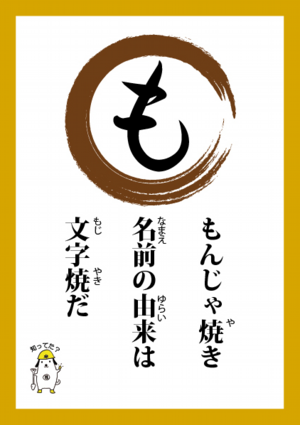
mojiyaki 文字焼き "frying letters", letting the dough drip from a spatula (shamoji) onto the hot pan, giving it patterns like letters.

This is the fore-runner of okonomiyaki.
moji . monji . monja . monjayaki


Most Monjiyaki-ya in Edo opened their stalls (yatai) during the many festival days of temples and shrines.

.......................................................................


monja yaki namae no yurai wa moji yaki

the origin
of the word "monjayaki"
is "writing letters "


............................................

杓子程筆では書けぬ文字焼屋
shamoji hodo fude de wa kakenu mojiyakiya

with a spatula
he writes better than with a pen -
the "fried letters" chef


source : blog.oricon.co.jp/masuda


. Food vendors in Edo .


:::::::::::::::::::::::::::::::::::::::::::::::::::::::::::::::::::::::::::::::::::::::::::::::::::::

26 May 2015

MINGEI - Kyushu - obake no Kinta

LINK
http://omamorifromjapan.blogspot.jp/2011/08/kumamoto-folk-toys.html

.......................................................................


obake no Kinta お化けの金太 Kinta the Ghost

- quote -
Obake no Kinta or Kinta the Ghost
is a folk toy that originated in Kumamoto City, Kumamoto Prefecture.
The toy consists of a head with a string in the back of it. When the string is pulled, Kinta rolls his big round eyeballs and sticks out his tongue. A bamboo spring is concealed in his head which, when pulled, triggers the eyes and the tongue to move at the same time. Kinta with his red face and a black conical hat makes a striking impression on small children and he often scares them a little. He is a popular toy among adults, however.


The most important process in making this toy is the making of the bamboo spring. The quality of this spring determines the quality of the toy.
When Kato Kiyomasa built the Kumamoto Castle, there was a popular foot soldier named Kinta who had a funny face and who was good at making people laugh. He was affectionately called "Clown Kinta". The "Kinta the Ghost" toy was said to have been created during the Kanei era (1848 ~ 1853) by a doll maker, Hikoshichi Nishijinya 西陣屋彦七, who started making mechanical toys based on stories about Kinta.
Because of his unique action, Kinta the Ghost was also known as the Goggle-eyed Doll.
- source : nippon-kichi.jp -

guriguri me どんぐり目, 目くり出し人形 meguridashi ningyo - goggle-eyed doll


. Kato Kiyomasa 加藤清正 .
(1562 - 1611) Katoo Kiyomasa

.......................................................................

MINGEI - chonkakegoma from Higo Kyushu

LINK
http://omamorifromjapan.blogspot.jp/2011/08/kumamoto-folk-toys.html

.......................................................................


Higo chonkakegoma 肥後ちょんかけごま flying spinning top from Higo
Chon'kake Goma - chonkake koma - Higo Chonkake Goma


This spinning top originates in Indonesia. It was introduced first in Kumamoto about 400 years ago. It is a bit bigger in diameter than other Japanese spinning tops.


The rope is wound around the metal center pin and then the top is thrown into the air and caught with the rope, moved along the cord and thrown into the air again. It is about 11 cm in diameter and like a flat plate, decorated with thin rings in black, green or yellow color.
Made from the wood of sarusuberi (Crape myrtle) or tsubaki (camellia tree).


ちょんかけごま / 山本貞美 Yamamoto Sadami


. koma 独楽 spinning tops from Japan .

.......................................................................


25 May 2015

LEGENDS - Jizo in Aichi

LINK
http://gokurakuparadies.blogspot.jp/2015/04/jizo-legends-01.html

..............................................................................................................................................

- - - - - Aichi 愛知県

okama Jizoo お釜地蔵 Jizo and the cooking pot


Once upon a time
there was evil mother who tried to kill her child by boiling it in a huge pot. But
suddenly, Jizo sama appeared to act as a substitute for her kid.
The evil mother clearned up her act and mind when she saw Jizo standing in the hot water.
Since then it is said that this Okama Jizo protects the children .

- source and more photos : Aoi san on facebook -


..............................................................................................................................................

YAKUSHI - and cats - Nagano legend

LINK
http://gokurakuparadies.blogspot.jp/2015/05/neko-yakushi.html

.......................................................................

Kotaroo Yashiki 小太郎屋敷 The Home of the Kotaro Family

Once upon a time
in 根津村 Nezu village a certain 六部 Rokubu took a retreat 長命寺大日堂 in the Dainichi Hall of the temple Enmei-Ji, when many young cats gathered around him and begun chanting:
国分寺の「小太ばば」来なけりゃ踊りにゃならん
"If Koda Baba from Kokubun-Ji does not come here, we cyan't dance!"

After a while a huge monster cat (kaibyoo 怪猫) came down with a storm and begun a wild dance with the small kittens.
Rokubu hit the monster cat with his staff and she fled, splatting blood on the way.

Next day it became clear that the "monster cat" was in fact an old grandmother in the home of Kotaro in the hamlet next to Kokubun-Ji.
So Rokubu went to visit her and saw that the old hag had hurt her leg on the spot where he had hit the cat last night.

To save her soul Rokubu begun to pray to Yakushi Nyorai and in a short while the cat showed her true nature and fled to the mountain 尾野山 Onoyama.
When the family searched the house, they found the bones of an old woman hidden under the veranda.
To our day, there is a stone marker with the inscription Rokubu 「六部」 in the compound of Kokubun-Ji

.

23 May 2015

KAPPA - Yokai of Japan

LINK
http://kappapedia.blogspot.jp/2015/01/yokai-monsters.html

- quote -
Reviving Japan's Dreaded and Beloved Ghosts
Tanuki, the badger-like, shape-shifting creatures of Japanese lore, are a rascally, impetuous bunch. In one tale, a tanuki playfully transforms into a steam train but then gets flattened by a real train coming from the opposite direction. In another, a tanuki kills an old woman and makes soup out of her, then takes her form and feeds the soup to her husband.

Fantastical monsters like the tanuki abound in Michael Dylan Foster's "The Book of Yokai: Mysterious Creatures of Japanese Folklore" (University of California Press), one of several books about yokai that have hit American shelves this year.

In June, Zack Davisson will publish "Yurei: The Japanese Ghost" (Chin Music Press), a critical look at the history of some of Japan's most dreaded and beloved spooks. Both are scholarly texts enlivened by images of the beasts in scroll paintings, woodblock prints and original illustrations.


Michael Goldstein's "Yokai Character Collection" (PanAm Books) is more pictorial. It has the gruesome look and feel of a Dungeons & Dragons manual, with Japanese peeping toms and anthropomorphic umbrellas taking the place of knights and gnomes. The book's illustrator, Chip Boles, seemed to have fun imagining what beasts like a mokumokuren, a "sliding door filled with hundreds of eyes," and a kappa, a water demon often blamed for drowning horses and humans, might look like.

And then there's Matthew Meyer's forthcoming "The Hour of Meeting Evil Spirits," an encyclopedic look at yokai that includes notes on each creature's appearance, behavior and favorite hangouts. Mr. Meyer's paintings combine the vibrant colors of traditional Japanese woodblock prints with references to Asian horror movies and contemporary manga. The result is a coffee-table book (self-published) that doubles as an illustrated guide, full of legends and obscure yokai trivia.
Why the recent crop of yokai books in the United States?
- snip

New texts and stories are still being discovered and translated, and the abundance of source material can be a blessing and a curse for yokai researchers. How do you define a creature that can vary from period to period, or even town to town? "When I see yokai mentioned, it will often just say 'a kappa is a so-and-so,' "
Mr. Foster said. "So my responsibility is really to complicate that, so that people will understand that a kappa can be many different things, depending on where and when you're speaking of it."

There are also beasts whose stories have been lost, but whose images remain, like the tofu-kozo, a bigheaded servant boy holding a block of uncooked tofu. "There's a number of images of that, but nobody knows why they exist," Mr. Foster said. "It might have been an Edo period advertising campaign, but that's all speculation."

Among the creepiest of yokai are the yurei, spirits of the dead who look nothing like typical Western ghosts. In "Yurei: The Japanese Ghost," Mr. Davisson, a translator of a number of classic manga, profiles several yurei. Two of the most famous are the tragic Okiku, a young girl who threw herself down a well (or was thrown) after breaking one of her master's prized dishes, and Oiwa, a hapless wife cursed with just about the worst husband ever (she is usually depicted with her left eye dripping down her cheek, the result of her spouse's botched attempt to kill her with poison).


Yurei have inspired countless paintings and illustrations over the centuries, but perhaps the most influential is Maruyama Okyo's "The Ghost of Oyuki" (1750), a portrait that the artist made of his recently deceased lover. Her ghost — long black hair, pale clothing, no feet — appeared to him in a dream, and his painting set the visual mold for every Japanese ghost to come, from paintings and prints to Kabuki characters and horror films. "After that painting," Mr. Davisson said, "that's how they all looked."

Fans love tracking these evolutions over time, as well as learning every bit of information about as many yokai as they can. This might explain why a lot of these books, scholarly or not, have the look and feel of illustrated encyclopedias, with detailed descriptions of scores of creatures.

"When you look at pop culture in Japan today, a lot of it is really based on this desire to catalog, this sort of encyclopedic imagination," said Bill Tsutsui, a Japanologist and author of "Godzilla on My Mind: Fifty Years of the King of Monsters."

Why do the centuries-old monsters continue to fascinate, even for readers who don't necessarily have a collector's bent? "There's the mystery of the world about them," Mr. Tsutsui said. "You get that in this folkloric sense of the past: that the real world around us is beautiful and wonderful, and yet can be really horrible, too."
- source : ROBERT ITO - NYT -

.

22 May 2015

YAKUSHI - Neko Yakushi Cat


[http://darumasan.blogspot.jp/]
[ . BACK to DARUMA MUSEUM TOP . ]
. Yakushipedia - ABC-Index 薬師如来 .
::::::::::::::::::::::::::::::::::::::::::::::::::::::::::::::::::::::::::::::::::::::::::::::::::::::::::::::::::::::::::::::::::::::::::::::::::::::::::::::::::::::::::::::

Neko Yakushi 猫薬師 Yakushi Nyorai and the Cat


source : rhinonotunokeshihan.blog

猫薬師如来 Neko Yakushi Nyorai

::::::::::::::::::::::::::::::::::::::::::::::::::::::::::::::::::::::::::::::::::::::::::::::::::::::::::::::::::::::::::::::::::::::::::::::::::::::::::::::::::::::::::::::


- - - - - Fukushima 福島県 - - - - -

薬師瑠璃光如来堂の猫像 The Cat Deity of the Yakushi Ruriko Nyorai Do Hall
The Cat Deity of Fukushima 福島県の猫神

伊達市梁川町山舟生字鍛治屋場 / Kajiyaba Yanagawamachi Yamafunyū Date-shi, Fukushima


The local people call this hall 日面薬師堂 Hizura Yakushi Do, since it is located at the border between the hamlets of Kajiyaba and Hizura.
It is situated on a hill with stone steps leading up in the compound.
The hall has been founded in 1639.

There is also a statue of Jizo Bosatsu from 1997 in the compound -
「南無富多卦佐地蔵尊」平成九年 (1997).

On the way up to the hall there are many stone markers and statues.
One of them is the Cat Deity.


- source : nekonokamisama.blog -


..............................................................................................................................................

- - - - - Nagano 長野県 - - - - -

瑠璃寺の薬師猫神 Ruji-Ji no Yakushi Neko Kamisama
長野県伊那 812 Ojimasan, Takamori, Shimoina District, Nagano

「もりわじん」の猫薬師 Mori Wajin no Neko Yakushi
inspired by the Daibutsu of Nara


source : kinnyanko.blog.fc2.com


薬師猫神様 Yakushi Nekokamisama - by Mori Wajin

In former times, the Cat was an important "Deity" to help protect the silk worm farmers from the many mice. Mori Wajin doubled this deity with Yakushi Nyorai.


2006年
● 大作「薬師猫神」製作 - 長野県 瑠璃寺へ奉納


- source : www.takamori.ne.jp - Mori Wajin -


..............................................................................................................................................

- - - - - Tokyo 東京 - - - - -


Tokyo 三宅島 三宅村 Mitake Island

Yakushi Sama no kara neko 薬師様のカラ猫

When a child cries and mother does not know what to do about it, she tells it
"Here comes the karaneko cat of Yakushi Sama!".
薬師様のカラ猫だぞ


karaneko 唐猫 ?

. Yakushi Legends from Tokyo / Edo  東京 - 江戸と薬師さん  .


..............................................................................................................................................

- - - - - Tottori 鳥取県 - - - - -

三朝薬師の湯 Tottori Misasa Yakushi no Yu Hot Spring

Koyama no Neko Yakushi 湖山の猫薬師 Yakushi the Cat from Koyama

Once upon a time
there was a Yakushi Do Hall dedicated to Yakushi Nyorai in the village of 賀露(かろ)町 Karo-Cho, which had been build by 伏野長者 the rich Village Elder Fushino of Koyama 湖山長者.
He lived comfortable with many servants and one cat, well beloved by him and the maid servants. Fushino had taught his cat how to say prayers and live a benevolent life.
But his wife did not like cats at all.
(The story about the cat continues below.)

When Fushino died, there was nobody to say prayers and venerate at the Yakushi Hall any more. It declined rapidly.
Then one night, the villagers saw a strong light at the top of Mount Koyama 湖山. This happened for many nights in a row, so the villagers went up to the mountain top and there they found the statue of a Buddha sitting under a pine tree.

"If a Buddha is sitting here, it must be a blessed place for rituals. Let us take the statue back home to venerate it."
The young folks of the village brought it downhill and all villagers could pray to it now.
Then someone realized what had happened:

"This is the Yakushi Nyorai of Karo village. He must have felt homesick for Mount Koyama and come back to sit there!"
So they hurried to built a small hall for the statue and found a priest named 浄西坊 Kiyonishi Bo for the daily duties.

One day when priest Kiyonishi was saying his daily prayers he saw a light shining from under the statue. When he stretched out his arm to touch in, it was the mummy of a cat with red hair and its eyes where still shining.

That night he had a dream and a cat talked to him:
"I am the cat of the rich village elder Fushino of Mount Koyama.
But his wife did not approve of my living in their home and I was kicked out.
I lived in 因幡山 Mount Inabayma for a while. One maid servant of Fushino once came to search for me and we had a talk, but I stayed on. As a present, I gave a white envelope to the maid servant.
When the maid opened the envelope back home, there was a painting of a dog inside, and 10 large pieces of gold.


Fushino's wife was surprized, but soon had a plan.
"If the maid got 10 pieces of gold, I am sure they will give 100 to me, the Lady of the House" and off she went to Inabayama.
She stayed there over night, but when she opened the sliding door just a bit to have a peek into the other room, she saw a huge white cat, just ready to jump at her.
The lady was too afraid and could not move in her shock.
At this moment the cat that had lived in her home turned up too and said:
"Remember, you have always been so mean to me. Now I get my revenge!"
and the cat jumped to the throat of the woman and bit her to death.

(Now the legend goes back to Yakushi san and the story the cat told in the dream.)

One day I was walking near the fields when the area suddenly flooded and became a pond and me, not able to swim, was swept right into the middle of the new pond (Koyama Ike 湖山池), getting weaker and weaker as I struggled to stay above water. Finally I died.
My body stayed there and eventually became a small island, 猫島 Nekojima, "Cat Island".
The Village Elder had taken good care of me while I was still alive.
So when I died I did not leave this world, became a mummy and now are back to help others!"


Just then Kiyonishi woke up from his dream.
He remembered that a cat with red hair had come to his place to live here about 5 or 6 years ago. This cat used to put its paws together like a human being in prayer. This must have been the cat from the Village Elder, now become a mummy.

When he had reasoned so far, Kiyonishi jumped out of his bed, took the mummy of the cat, placed it in a small sanctuary and placed it at the right side of Yakushi Nyorai in his temple.

Since then, Yakushi from Koyama has been called "猫薬師 Neko Yakushi" "Yakushi the Cat".
And of course, in the temple hall there are no mice at all.

Farmers come here to get a special amulet that will keep the mice out of their homes and rice storage.
If something is lost and people come here with a prayer sincerely to find it, indeed, it will soon be found.

- reference -


- quote -
Koyama Pond Area
Close to Hakuto Beach, with a plentiful amount of sweetbriers.
A lagoon separated from the sea by deposits from the Sendai River.

The Koyama Pond is located 6 kilometers west of central Tottori City in eastern Tottori, close to Tottori Airport. It was an inlet of the Sea of Japan, but became a closed lagoon when deposits from the Sendai River separated it from the sea. There are seven islets in the pond, and the largest, Aoshima, has a park with a well-equipped promenade and camping ground.

This pond, being 4 kilometers long from east to west and 2.4 kilometers wide from north to south, is almost a lake in size and is a sanctuary for eels, carp and other freshwater fish. They still practice a traditional style of fishing there, called "Ishigama-ryo," where fishers form a trap with large rocks and wait for the fish to enter.
- source : www.jnto.go.jp/eng -


::::::::::::::::::::::::::::::::::::::::::::::::::::::::::::::::::::::::::::::::::::::::::::::::::::::::::::::::::::::::::::::::::::::::::::::::::::::::::::::::::::::::::::::


Yakushigama, Yakushi no Kama 薬師窯 Yakushi Kiln


Wishing a Happy New Year 2014!


The name of this kiln dates back to a legend of Gyoki Bosatsu, who had built a small sanctuary for Yakushi Nyorai 薬師如来の祠, which was in the compound of Chugai Toen Company till the end of the Edo period.

It was said to be able to cure eye disease and removed to the temple Hoosenji 宝泉寺 Hozen-Ji, where to our day there is a festival in honor of Yakushi Nyorai, O-Yakushi San 「お薬師さん」 in November (from 8 to 12).

Since its founding the Yakushi Kiln has been protected by Yakushi san and has been able to produce many items that make people happy and feel well. Some are amulets to prevent eye disease.

- source : www.yakushigama.jp -

Chugai Toen 中外陶園
〒489-0821 愛知県瀬戸市薬師町50 / Aichi, Seto, Yakushi-Machi

. . . CLICK here for more cat Photos !


. Gyoki Bosatsu (Gyooki Bosatsu) 行基菩薩 .
(668-749 AD) Gyōki


::::::::::::::::::::::::::::::::::::::::::::::::::::::::::::::::::::::::::::::::::::::::::::::::::::::::::::::::::::::::::::::::::::::::::::::::::::::::::::::::::::::::::::::


source : www.art-seinin.com


. manekineko 招き猫 the Beckoning Cat .
- Introduction -


Join the friends on facebook !


. Yakushipedia - ABC-Index 薬師如来 .

. Yakushi Nyorai - Legends from the provinces .

. Yakushi Nyorai Pilgrimages 薬師霊場巡り - Introduction .


. O-Mamori お守り Amulets and Talismans .

. Japan - Shrines and Temples - ABC List .


[ . BACK to DARUMA MUSEUM . TOP . ]
[ . BACK to WORLDKIGO . TOP . ] - - - #yakushineko #nekoyakushi #yakushigama #yakushikiln #moriwajin - - -
::::::::::::::::::::::::::::::::::::::::::::::::::::::::::::::::::::::::::::::::::::::::::::::::::::::::::::::::::::::::::::::::::::::::::::::::::::::::::::::::::::::::::::::

--
Posted By Gabi Greve to Gokuraku - Jigoku on 5/21/2015 09:54:00 a.m.

FUDO - Warabe Fudo Child


[http://darumasan.blogspot.jp/]
[ . BACK to Daruma Museum TOP . ]
:::::::::::::::::::::::::::::::::::::::::::::::::::::::::::::::::::::::::::::::::::::::::::::::::::::::::::::::::::::::::::

Warabe Fudo 童不動 Fudo as a child

There are various statues with this name.

:::::::::::::::::::::::::::::::::::::::::::::::::::::::::::::::::::::::::::::::::::::::::::::::::::::::::::::::::::::::::::


made from remains of the Great Tohoku Earthquake, March 11, 2011.
For all the children who lost their lives.

- source : nichirin18.jp


:::::::::::::::::::::::::::::::::::::::::::::::::::::::::::::::::::::::::::::::::::::::::::::::::::::::::::::::::::::::::::

童のお不動様


- source : shogeikan -


:::::::::::::::::::::::::::::::::::::::::::::::::::::::::::::::::::::::::::::::::::::::::::::::::::::::::::::::::::::::::::


Child Fudo to pour water over  童不動水かけ願い

First time with the wish of happiness
for people you know.
Second time with the wish of happiness
for people you do not know.
Third time
with a wish for yourself.
Then fold your hands in prayer.


at Henjoin in Ageo, Saitama. 遍照院 上尾 埼玉県
- shared by James, facebook -


:::::::::::::::::::::::::::::::::::::::::::::::::::::::::::::::::::::::::::::::::::::::::::::::::::::::::::::::::::::::::::


CLICK for more photos !

:::::::::::::::::::::::::::::::::::::::::::::::::::::::::::::::::::::::::::::::::::::::::::::::::::::::::::::::::::::::::::


. - Join Fudo Myo-O on facebook - Fudō Myō-ō .

:::::::::::::::::::::::::::::::::::::::::::::::::::::::::::::::::::::::::::::::::::::::::::::::::::::::::::::::::::::::::::

. Pilgrimages to Fudo Temples 不動明王巡礼
Fudo Myo-O Junrei - Fudo Pilgrims .


[ . BACK to WORLDKIGO . TOP . ]
[ . BACK to DARUMA MUSEUM TOP . ]
- - #fudo - -
:::::::::::::::::::::::::::::::::::::::::::::::::::::::::::::::::::::::::::::::::::::::::::::::::::::::::::::::::::::::::::

--
Posted By Gabi Greve to Fudo Myo-O - Introducing Japanese Deities at 5/21/2015 09:56:00 PM

21 May 2015

DARUMA - Yakushi Legends Tokyo


[http://darumasan.blogspot.jp/]
[ . BACK to DARUMA MUSEUM TOP . ]

. Yakushipedia - ABC-Index 薬師如来 .
::::::::::::::::::::::::::::::::::::::::::::::::::::::::::::::::::::::::::::::::::::::::::::::::::::::::::::::::::::::::::::::::::::::::::::::::::::::::::::::::::::::::::::::

Yakushi Nyorai 薬師如来 the Buddha of Medicine - Bhaisajyaguru
Legends from Tokyo / Edo  東京 - 江戸と薬師さん 

- and
Tako Yakushi 蛸薬師 Octopus Yakushi  

Spelled 多幸薬師 TA KO Yakushi for a lot of happiness and good luck.

::::::::::::::::::::::::::::::::::::::::::::::::::::::::::::::::::::::::::::::::::::::::::::::::::::::::::::::::::::::::::::::::::::::::::::::::::::::::::::::::::::::::::::::

. Kinegawa Yakushi 木下川薬師 Yakushi from Kinegawa .
- Kigegawa Yakushi Engi - misspelling of Kinegawa

..............................................................................................................................................

三宅島 三宅村 Mitake Island

Yakushi Sama no kara neko 薬師様のカラ猫

When a child cries and mother does not know what to do about it, she tells it
"Here comes the karaneko cat of Yakushi Sama!".
、薬師様のカラ猫だぞ

karaneko 唐猫 ?

. Neko Yakushi 猫薬師 Yakushi Nyorai and the Cat .


..............................................................................................................................................

. Tako Yakushi 目黒の蛸薬師 Octopus Yakushi in Meguro, Edo .
多幸薬師 TA KO Yakushi for a lot of happiness and good luck

.......................................................................


- - - - - and one more Tako Yakushi in Kyoto

Tako Yakushidō (Octopus Yakushi Hall), Eifukuji Temple 永福寺 (lit. = Temple of Eternal Fortune), Kyoto
浄瑠璃山林秀院永福寺 - 京都市中京区新京極蛸薬師東側町503


- quote -
The temple originally stood in Nijo Muromachi and was founded in 1181. The engi, retold in the temple's pamphlet, informs believers about the miraculous origins of the temple.


In the Muromachi ward of Kyoto lived a rich man who shaved his head and sought his refuge in the Yakushi Buddha of Enryakuji on Mt Hiei 比叡山. Year after year, he made monthly pilgrimages to this Buddha. But as the years went by, he became old and weak, and one day, he spoke in front of the Yakushi Buddha:

"I am getting too old to continue my practice of monthly pilgrimages. Please let me have your image to place in my home, Lord Yakushi!"

After uttering this wish, the devout believer descended from Mt Hiei. That night, the Yakushi Buddha appeared to him in a dream and spoke: "In a certain place, a stone Yakushi statue carved by St Dengyo 伝教大師 [i.e. Saicho 最澄, the founder of Enryakuji and Tendai Buddhism] himself has been buried. You can take that home."

Full of joy, the next day the wealthy man climbed the mountain and when he dug in the indicated spot he indeed found a holy image hewn from stone that emitted a wondrous light.

He took this image home and built a hall of six by four bays for it. This temple was called Eifukuji, or Temple of Eternal Bliss, and it greatly flourished and young and old, men and women, flocked in great numbers to the temple to pay their respects.

In the Kencho period (1249-56) of Emperor Gofukakusa 後深草天皇 (1243 - 1304) there lived a monk called Zenko 善光 in this temple. It happened at one time that his mother fell ill. Although he took good care of her, she did not recover and spoke from her bed to Zenko: "If only I could eat some octopus (tako タコ), I like that so much from since I was young, that my illness might get better!"

Zenko was not allowed to buy octopus, a living being, for a meal because he was a Buddhist monk and therefore he was greatly distressed. Still, the thought of his sick mother was stronger than his awe for the precepts, so he took a wooden box in his arms and went to the market to find an octopus.

When he walked back, some people became suspicious that he, a monk, had bought a living creature for food and they followed him all the way to the gate of his temple, pressing him to show what was in the box. Zenko could not refuse and prayed with all his heart to the Lord Buddha: "I have only bought this octopus to help my mother recover from her illness. Lord Yakushi, please help me out of this difficulty!"

When he opened the box, the eight-legged octopus had been transformed into a set of eight sutra scrolls お経の巻物 and a light shone from them in all four directions.


The people who saw this all pressed their hands together in prayer and sang the praises of the Lord Yakushi, the Buddha of the Lapis Lazuli Paradise.

Strangely enough, the scriptures turned again into an octopus who then jumped into the pond in front of the temple where he changed into the form of the Yakushi Buddha. He emitted a green Lapis Lazuli light and when this struck the head of Zenko's mother her illness was immediately healed. She rose from her bed and in a loud voice sang the praises of the Lapis Lazuli Buddha, over and over again.

Thus the temple came to be known as Octopus Yakushi. From then on, when people visited and prayed for relief from illness, they immediately were healed; when women prayed for children, they were blessed with offspring; and all difficulties and problems were eliminated.

This reached the ears of His Majesty the Emperor and in 1441 the temple received an Imperial License. Since then prayers have been said here for bountiful harvests, the Emperor's long life, and the peace of the nation. When one prays ardently for divine protection, no wish is left unfulfilled: in the present world the seven ills are immediately dispelled and the seven blessings immediately granted.
- source : Ad Blankestijn -


To our day, the octopus is featured at the temple at the Yakushi Hall 蛸薬師堂
to rub for healing.


nade Yakushi なで薬師 Yakishi to be rubbed

.......................................................................


ema 絵馬 votive tablets
- source : yaplog.jp/emain -


CLICK for more photos !


::::::::::::::::::::::::::::::::::::::::::::::::::::::::::::::::::::::::::::::::::::::::::::::::::::::::::::::::::::::::::::::::::::::::::::::::::::::::::::::::::::::::::::::


oboosan to tako お坊さんとタコ The priest and the octopus

Once upon a time
a priest on a trip was walking along the beach, when suddenly a large octopus came out of the waves and pleaded "Please let me be your student"!
So the priest took the octopus out of the water and carried it with him on his trip.

By nightfall the priest had completely lost his way. To ask for a shelter he knocked at a farmhouse. The owner was a man with bitter face, but when he realized the priest was carrying a delicious-looking octopus, he let them in.

While the priest was chanting the sutras for Yakushi Nyorai, the farmer prepared a very hot bath and tried to throw the octopus in it. Just at that time the priest interrupted his chanting with a loud shout of "Pay Attention"「喝!」 KATSU! and the clever octopus made his escape from the hot bath, while the farmer looked quite perplexed.
Next morning the priest and his octopus companion continued their trip safely.

The farmer, who had not gotten his delicious boiled octopus last night, was mubemling to himself and then tried to get into the hot bath himself. Just then - out of the bathtub came the large legs of an octopus and tired to suck at the body of the farmer.
This octopus was in fact Yakushi Nyorai, to whom the priest had prayed the night before.
Yakushi San begun to suck out all the bad intentions of the man's heart and attitude.


The farmer became quite a gentle caring man, after Yakushi san had sucked out his all maliciuos intentions.
And the trip of the priest and his octopus companion continued.


source : hinoki-diary.blogspot.jp

delicious Tako wafers with sweet filling 明石銘菓:たこ最中


::::::::::::::::::::::::::::::::::::::::::::::::::::::::::::::::::::::::::::::::::::::::::::::::::::::::::::::::::::::::::::::::::::::::::::::::::::::::::::::::::::::::::::::


kuruma kaeshi no O-Yakushi san 車返のお薬師さん Yakushi who brought the car to a stop

In the time of the Kamakura Shogunate 鎌倉幕府 (1192 - 1333) they were transporting the statue of Yakushi Nyorai お薬師さん from 奥州平泉 Hiraizumi far away in Tohoku to Kamakura.
On their way, when they passes Shiraito 白糸の地, the cart suddenly became very heavy and did not move any more.
So the drivers decided to leave the statue here and built a small Hall for it.
They say that Yakushi had choosen this region of Shiraito for his stay.


- still trying to locate the Shiraito 白糸 -

::::::::::::::::::::::::::::::::::::::::::::::::::::::::::::::::::::::::::::::::::::::::::::::::::::::::::::::::::::::::::::::::::::::::::::::::::::::::::::::::::::::::::::::


Repairing a Yakushi statue from the Edo period


薬師如来立像(江戸時代)の現状・保存修復
http://buddha-statue.at.webry.info/200901/article_1.html


::::::::::::::::::::::::::::::::::::::::::::::::::::::::::::::::::::::::::::::::::::::::::::::::::::::::::::::::::::::::::::::::::::::::::::::::::::::::::::::::::::::::::::::


- - - - - reference - - - - -

Monsters, legends and Yakushi 妖怪データベース
- source : nichibun yokai database

- source : manga nihon mukashibanashi -

::::::::::::::::::::::::::::::::::::::::::::::::::::::::::::::::::::::::::::::::::::::::::::::::::::::::::::::::::::::::::::::::::::::::::::::::::::::::::::::::::::::::::::::


Join the friends on facebook !


. Yakushipedia - ABC-Index 薬師如来 .

. Yakushi Nyorai - Legends from the provinces .

. Yakushi Nyorai Pilgrimages 薬師霊場巡り - Introduction .


. O-Mamori お守り Amulets and Talismans .

. Japan - Shrines and Temples - ABC List .


[ . BACK to DARUMA MUSEUM . TOP . ]
[ . BACK to WORLDKIGO . TOP . ] - - - #yakushilegendstokyo #yakushitokyolegends #takoyakushi #yakushitako - - -
::::::::::::::::::::::::::::::::::::::::::::::::::::::::::::::::::::::::::::::::::::::::::::::::::::::::::::::::::::::::::::::::::::::::::::::::::::::::::::::::::::::::::::::

--
Posted By Gabi Greve to Gokuraku - Jigoku on 5/20/2015 12:55:00 p.m.