23 Mar 2016

MINGEI - Shimane Folk Art

http://omamorifromjapan.blogspot.jp/2011/07/shimane-folk-toys.html

. Shimane Folk Toys

[ . BACK to DARUMA MUSEUM TOP . ]
:::::::::::::::::::::::::::::::::::::::::::::::::::::::::::::::::::::::::::::::::::::::::::::::::::::::::::::::::::::::::::::::::::::::::::::::::::::::::::::::::::::::::::   

Shimane Folk Art - 島根県


The capital is Matsue 松江
Lake Shinjiko 宍道湖
The Sanin Region, San-In, San'In 山陰地方
Okinoshima  隠岐の島


. Lafcardio Hearn 小泉八雲(ラフカディオ・ハーン) Koizumi Yagumo .


Iwami Ginzan 石見銀山 Old Silver Mines at Iwami
It was added to the World Heritage List in 2007.
© More in the WIKIPEDIA !
. tenryoo, tenryō 天領 Tenryo Government Land "Land of Heaven" - Iwami .


. Izumo Kaido 出雲街道 The Old Road of Izumo .


. Izumo Taisha 出雲大社 Izumo Grand Shrine .
with enmusubi amulet for a good couple


. Izumo Washi 出雲和紙 Washi paper from Izumo .


The Izumo region is a famous producer of menoo めのう (瑪瑙) , 出雲めのう agate stone.
. Agate from Izumo - magatama jewel production .


:::::::::::::::::::::::::::::::::::::::::::::::::::::::::::::::::::::::::::::::::::::::::::::::::::::::::::::::::::::::::::::::::::::::::::::::::::::::::::::::::::::::::::  

Hamada town 浜田


Nagahama ningyoo 長浜人形 dolls from Nagahama
This region is famous for its contact with Korea since ancient times. Nagahama dolls have a history of more than 400 years, when Korean craftsmen came to Japan. They used the localclay to make these dolls. Topics are dolls for the Girls and Boys festival, Nagahama Tenjin sama, the 12 zodiac animals and others.


Iwami kagura men 石見神楽面 Kagura dance masks from Iwami

. Kagura Dance (kagura 神楽) .

........................................................................................................................................................
Hirata village 平田

- quote -
Hirata momen kaido 平田の木綿街道 Hirata Cotton Road
Hirata is a small town situated near the shore of Lake Shinji, part way between Izumo and Matsue...
... its prosperity peaked in the late Edo Period when locally produced Hirata Cotton became much sought after, especially in the Kansai region in the large cities of Osaka and Kyoto.
... there are sake breweries, soy sauce breweries - where, if you are feeling adventurous, you can try soy sauce flavored ice cream!


Isshiki Kazari 一式飾 
This is a unique type of folk art created locally in Hirata known as Isshiki Kazari, which is best translated as 'decoration made from a single type of goods'.
The most common materials are ceramics, but anything else can be used, wood, paper, metal even.
There is a famous sculpture of a lobster
made completely out of bicycle parts. Now, you may say that there are plenty of examples of art made from everyday objects, but it's the rules of Isshiki Kazari that mark it as a unique art form.
The objects that make up the sculpture
cannot be altered or damaged in any way. There can be no drilling, cutting, welding or gluing etc. Everything is held together by being tied with thin wire, the reason being that after the sculpture is made it is dismantled and all the objects can be reused again for their original purpose.
These rules can be traced back
to the origins of the artform in the early 18th century when a local man made a statue of the god Daikoku out of tea utensils to present to the local Tenmangu shrine.
The tradition continues and in July when the shrine festival is held is the best time to view a large selection of the creations.
It is worth repeating that this is a "folk" art, made by townspeople not professional artists.
... Kokokuji Temple
- source : japanvisitor.com -


CLICK for more photos !

- source and more photos : issiki-kazari.com -

..............................................................................................................................................
Izumo town 出雲

. hariko 張り子虎 papermachee tiger .

. ryuu 竜 dragon
Izumo take ningyoo 出雲竹人形 bamboo doll from Izumo, and see below


tsuchi ningyoo 出雲土人形clay dolls

... 白天神 white Tenjin sama from Hooki 伯耆(ほうき)Hoki
It was decorated on the Doll festival on March 3 for a boy who was born in the year before.

..............................................................................................................................................
Matsue town 松江
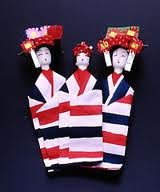

. Anesama ningyoo 姉様人形 "elder sister" dolls .
In Matsue, anesama dolls are called
hina san ヒナサン, or kamibina san 紙びなさん paper Hina dolls.
They have been made by the wives of lowly samurai.
Lafcadio Hearn praised them widely and made them known to the Western world.

.......................................................................

ito temari 糸てまり string handballs
- - - - - ai-temari 藍てまり made with Indigo threads


source : nagomi1ban.com/matue-ai

They come with various patterns for the four seasons.

. temari 鞠(まり)-手毬(てまり)hand ball, rag ball .

.......................................................................

kazari uma 飾り馬 decoration horse
Nowadays only small versions of this horse are made, by 大野博さん Ono san.


source : sanshisuimei.moo.jp/image/gangu

.......................................................................

mishadako, misha tako みしゃ凧 Musha samurai kite
(misha is the local dialect for musha)

Now made by 洋服店「ひつじや」Hitsujiya, 深津美晴さん, as a hobby.


source : sanshisuimei.moo.jp/image/gangu

.......................................................................


o-miya お宮 the shrine (small Izumo Taisha shrine)
. Izumo Taisha 出雲大社 Izumo Grand Shrine .


jookisen 蒸気船 steam boat

......................................................................

. fuku nezumi 福鼠 lucky mouse/rat .

. fuku kozuchi 福小槌 lucky hammer, mallet of Daikoku .

. Daikoku Ten 大黒天 .

.......................................................................

袖師窯 Sodeshi-gama Pottery

- quote -
Close to Shimane Art Museum, the kiln is an old Japanese house found off the main road. Sodeshi kiln was built in 1877 by Tomoichi Ono the first generation of the Ono family in Matsue. His son Iwajiro moved the kiln in 1893 to Sodeshi for easy access to Lake Shinji's boat transportation and he built 5 kilns and since then it has been known as Sodeshi-yaki pottery.

The third generation potter Toshiro was sympathetic to Muneyoshi Yanagi's Mingei folk art movement (Muneyoshi was also known as 'Soetsu'). He received Kanjirou Kawai, Shoji Hamada and Bernard Leach at the kiln, this influenced greatly the characteristics of Sodeshi pottery.
Toshiro Ono's Sake bottle and cup set was awarded a Grand Prix at the 1958 Brussels Expo.


The current generation potter Shinya and his 2 sons Tomohiko and Akihiko use materials such as persimmon, cobalt, iron oxide, straw ash and cinnabar together with various drip-painting, brush-painting, nail-fingering and comb-tracing techniques. They studied under Tatsuzo Shimaoka, another great Japanese potter who worked under Shoji Hamada in Mashiko, Japan.
- source :connect-shimane.com/crafts -

........................................................................................................................................................
Okinoshima, Oki no Shima 隠岐の島

- quote -
Oki gun 隠岐郡  Oki District, Shimane Prefecture
the traditional name for all four inhabited Oki Islands.
Okinoshima occupies all of the island of Dōgo, in the Oki Islands archipelago in the Sea of Japan, along with numerous offshore uninhabited islands and rocks. For administrative purposes, the Japanese government officially considers the disputed islet of Takeshima to be a part of the town of Okinoshima.
Okinoshima Town formed from the merger of Fuse, Goka, Saigō and Tsuma on October 1, 2004.
- - - More in the WIKIPEDIA !

.......................................................................

. umajiya no suzu 駅鈴(うまじやのすず)clay bell of the horse station .
stable bells (umaya no suzu うまやのすず)
ekirei, eki-rei 駅鈴(えきれい) / road bells (ekiro no suzu 駅路(えきろ)のすず)
and
Tamawakasumikoto Jinja 玉若酢命神社 Tamawakasu Mikoto Shrine
島根県隠岐郡隠岐の島町下西701

........................................................................................................................................................
Sada village 佐田町


Izumo take ningyoo 出雲竹人形 bamboo dolls from Izumo
They are well crafted and some have even won prizes at competitions.
One famous craftsman is Katsube 勝部, who carves each figure with great diligence.
He chooses his themes from the deities and legends of Izumo, from the folk dances and customs of his region
(どじょう掬い dojo sukui、さぎ舞 sagi mai、牛突き ushi tsuki) and others.
Katsube san had been in a Siberian prisoner's camp for many years, where he also learned to carve birch tree wood.

. take gangu 竹玩具 bamboo toys and dolls .


....................................................................... .......................................................................
Taisha village 大社町 - - (with the grand shrine of Izumo)

. Izumo Taisha 出雲大社 Izumo Grand Shrine .

. iwaidako 祝い凧 kites for celebrations .

. jooki じょうき boat floats .

.......................................................................

taichoochin, tai choochin 鯛堤灯 / taiguruma 鯛車 sea bream on wheels


source : nowaki3jyo.exblog.jp

The square block is made from bamboo, covered with bee's wax. The frame of the sea bream is also made from bamboo, covered with Izumo Washi paper, mostly in red. A candle is placed inside when used outside as a decoration for the Tanabata festival until the O-Bon Ancestor festival. They used to be made by each family with children, so the kids could pull the floats around on the village road in the evening.

.......................................................................

Taisha no ita shishi 大社の板獅子 lion head on a wooden board
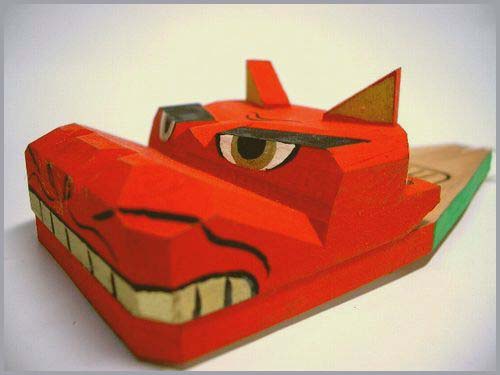

source : popeye.sakura.ne.jp/ibaraki

Sold also at other sub-shrines of Izumo in Japan.
An amulet for 縁結び enmusubi, 開運 kaiun good luck, 商売繁昌 good business, 厄除け warding off evil、農業 a good harvest and fish catch 漁業, protection from illness 医療.

..............................................................................................................................................
Yasugi village 安来

. Yasugibushi 安来節 dolls from the Yasugi song and dance .

........................................................................................................................................................

Shimane and the Izumo cult are also represented in

. Folk Toys from Tottori .

:::::::::::::::::::::::::::::::::::::::::::::::::::::::::::::::::::::::::::::::::::::::::::::::::::::::::::::::::::::::::::::::::::::::::::::::::::::::::::::::::::::::::::   

. Reference and Photos . Gangu Guide .
. Reference and Photos . Isamu Folk Toys .
. Reference and Photos . Yama no Ie . Folk Toys .

clay bells from Shimane, a large collection
一畑寺(一畑薬師) / 日御碕大神宮授与鈴・鬼 / 安来節 / しあわせ鈴 / 京峯窯・鬼瓦 / 泥鰌すくい - どじょうすくい / 連土鈴・七福神 and many more
- source : eonet.ne.jp/~i-kimoto/Furusato -

:::::::::::::::::::::::::::::::::::::::::::::::::::::::::::::::::::::::::::::::::::::::::::::::::::::::::::::::::::::::::::::::::::::::::::::::::::::::::::::::::::::::::::   

. WASHOKU . Regional Dishes from Shimane, Izumo, Matsue

MORE
. Shimane Folk Toys - this BLOG .


. Japan after the BIG earthquake March 11, 2011


[ . BACK to WORLDKIGO . TOP . ]
[ . BACK to DARUMA MUSEUM TOP . ]
- #shimane #matsue #izumo #hirata #okinoshima -
:::::::::::::::::::::::::::::::::::::::::::::::::::::::::::::::::::::::::::::::::::::::::::::::::::::::::::::::::::::::::::::::::::::::::::::::::::::::::::::::::::::::::::  

SHRINES - Tamawakasu Shimane

LINK
http://japanshrinestemples.blogspot.jp/2016/03/tamawakasu-mikoto-shrine-shimane.html

Tamawakasu Mikoto Shrine Shimane

[ . BACK to DARUMA MUSEUM TOP . ]
. Shinto Shrine (jinja 神社) - Introduction .
:::::::::::::::::::::::::::::::::::::::::::::::::::::::::::::::::::::::::::::::::::::::::::::::::::::::::::::::::::::::::::::::::::::::::::::::::::::::::::::::::::::::::::::::::::::

Tamawakasumikoto Jinja 玉若酢命神社 Tamawakasu Mikoto Shrine, Shimane
若酢大明神 Wakasu Daimyojin. 総社明神


島根県隠岐郡隠岐の島町下西701 / 701 Shimonishi, Okinoshima-chō, Oki-gun, Shimane

- quote -
Tamawakasu-no-mikoto Shrine
This shrine is the main general shrine of Oki, and was constructed in the Oki architectural style. Every year on 5 June an important festival called 御霊会 Gorei-furyū takes place in which eight sacred horses carrying the gods from eight different areas around the island gallop up to the shrine entrance.


Next door to the shrine is the Oki-ke Family Residence, where the head priest of the Tamawakasu-mikoto Shrine has lived for many, many generations. Inside is a small museum of important historical artifacts that were passed on through the generations, including the eki-rei station bells that originated in 646 and are the only ones remaining in Japan.
These treasures, the residence and the shrine are Important Cultural Property of Japan.

- - - - - Also introduced on this page are
Amasashihikono-mikoto Shrine あまさしひこみことじんじゃ - 隠岐神社
Kuniga Shrine 国賀神社
Mizuwakasu Shrine 水若酢神社
Takuhi Shrine  焼火神社
Yurahime Shrine  由良比女神社
- source : kankou-shimane.com -

Mizuwakasu Shrine 水若酢神社
The daughter of the head priest of the 祇官忌部家 Inbei family and becomes the bride of the 龍蛇 Ryuja Dragon-Serpent which resides in the pond.

.......................................................................


CLICK for more photos of the festival !
玉若酢命神社御霊会 (ごれえ)

.......................................................................

- quote
The biggest island in the Oki region is Dogo and on this island is located Tamawakasumikoto-jinja Shrine which enshrines numerous gods. The main shrine is a historic building with a thatched roof and is actually the Oki region's oldest shrine building. The shrine has been constructed in a unique Oki architectural style and in 1992 it was designated as national important cultural property.
The highlight of the shrine grounds is a 30m tall cedar with 20m roots that is more than 2000 years old, commonly called "Yaosugi".
The tree's name of Yaosugi comes from the legend of Yao Bikuni, which involves an immortal woman named
Yao Bikuni who is said to have planted this tree and then come back 800 years later to see how the tree was doing. The tree itself is designated as a natural national treasure.
Every year on June 5 the Gorei Furyu festival is held. This festival involves 8 horses carrying the 8 gods of the island to the shrine where they gather.
- source : japanhoppers.com/chugoku

- - - - - Deities in residence - - - - -
玉若酢命 Tamawakasu no Mikoto
大己貴命 Okuninushi
須佐之男命 Susanoo
稲田姫命 Kushinadahime
事代主命 Kotoshironushi
須世理姫命 Suserihime


..............................................................................................................................................


shuin 朱印 stamp

.......................................................................

umajiya no suzu 駅鈴(うまじやのすず)clay bell of the horse station
ekirei, eki-rei 駅鈴(えきれい)
. Shimane Folk Art - 島根県 .


- reference : eonet.ne.jp/~i-kimoto/Furusato -

In memory of Emperor Kotoku (孝徳天皇, 596?-654) Kōtoku around 646, who had horses for messengers stationed here and in many other parts of Japan.
駅馬 - horses for the messengers of the Emperor
伝馬 - packhorses for luggage
Emperor Kotoku choose the era name Taika ("Great Change") for the first half of his reign.

- - - - - HP of the Shrine
- source : wikipedia -


- quote -
Station bell
Under the Japanese ritsuryō system, station bells or post bells (駅 鈴 ekirei) were bells of red copper issued by the central government or by local provincial government offices to travelling officials or messengers known as ekishi (駅使). Functioning as a proof of identity, they allowed them to procure horses and labour at post stations. These post stations were located every 30 ri (16 kilometers) each providing between five and twenty messenger horses depending on the grade of the road.
Depending on the rank of the emissary, the bells were marked with a number of notches regulating the number of horses that could be requested. A prince of royal blood of first rank would receive ten horses. On urgent dispatches the ekishi would ride with the bells ringing in order to be able to change horses at any time of day or night without delay. These bells were also known as
post road bells (ekiro no suzu 駅路(えきろ)のすず) or stable bells (umaya no suzu うまやのすず).
The system was established in the Taihō Code from 701 and was in use until the end of the 12th century or the end of the Heian period when it fell in disuse together with the demise of the centralized state.

A set of two station bells located on Dōgo island in Okinoshima, Shimane Prefecture and known as
Ekirei of Oki Province (隠岐国駅鈴 oki no kuni ekirei) has been designated as Important Cultural Property of Japan.
Attached to the nomination is a six-legged Chinese style chest bestowed by Emperor Kōkaku. The bells have been handed down in the Oki family whose members were associated with the
Tamawakasu no Mikoto Shrine (玉若酢命神社 tamawakasu no mikoto jinja) and the regional administrators of Oki Province. They are currently located in the Oki family treasure hall (億岐家宝物館 Oki-ke Hōmotsu-kan) in Okinoshima.
The two bells are of flat octagonal shape and made of cast copper. On one side of the trunk the character "駅" (station) is carved, and on the opposite side, the character "鈴" (bell). At the bottom of the bells three and four legs are attached respectively. They weigh in at 700 g (25 oz) and 770 g (27 oz) respectively. Before World War II, the bells had been designated as National Treasure of Japan on April 30, 1935, but lost this status in the reorganisation of cultural property protection after the war when all previously designated National Treasures were demoted to Important Cultural Properties in 1950.
- - - More in the WIKIPEDIA !

..............................................................................................................................................

- quote -
Taika Reform 大化の改新
The Reform Edicts severely curtailed the independence of regional officials, creating an effective, centralized imperial government, and constituted the imperial court as a place where the people could bring their appeals and complaints.
..... Barriers and outposts shall be erected, and guards and post horses for transportation and communication purposes shall be provided. Furthermore bell-tokens shall be made and mountains and rivers shall be regulated. .....
..... A separate household tax (kocho) shall also be levied, under which each household shall pay one rod and two feet of cloth, and a surtax consisting of salt and offerings. The latter may vary in accordance with what is produced in the locality. With regard to horses for public service, one horse of medium quality shall be contributed by every one hundred households, or one horse of superior quality by every two hundred households. If the horses have to be purchased, each household shall contribute one rod and two feet of cloth toward the purchase price.
- source : newworldencyclopedia.org/entry/Taika_Reforms -


- quote -
The Taika Reforms 大化の改新 Taika no Kaishin
were a set of doctrines established by Emperor Kōtoku (孝徳天皇 Kōtoku-tennō) in the year 645. They were written shortly after the death of Prince Shōtoku, and the defeat of the Soga clan (蘇我氏 Soga no uji), uniting Japan. The reforms also artistically marked the end of the Asuka period and the beginning of the Hakuhō period.[1][2] Crown Prince Naka no Ōe (who would later reign as Emperor Tenji), Nakatomi no Kamatari, and Emperor Kōtoku jointly embarked on the details of the Reforms. Emperor Kōtoku then took the name "Taika" (大化), or "Great Reform".

The Reform began with land reform, based on Confucian ideas and philosophies from China, but the true aim of the reforms was to bring about greater centralization and to enhance the power of the imperial court, which was also based on the governmental structure of China. Envoys and students were dispatched to China to learn seemingly everything from the Chinese writing system, literature, religion, and architecture, to even dietary habits at this time. Even today, the impact of the reforms can still be seen in Japanese cultural life.
- - - More in the WIKIPEDIA !


source : 幸麿の研究所

- quote -
Emperor Kōtoku 孝徳天皇 Kōtoku-tennō
(596 – November 24, 654) was the 36th emperor of Japan, according to the traditional order of succession.
The years of his reign lasted from 645 through 654.
He enacted the Taika Reform Edicts.
..... The years of Kōtoku's reign are more specifically identified by more than one era name or nengō.
Taika 大化 (645–650)
Hakuchi 白雉 (650–655)

- - - More in the WIKIPEDIA !


- quote -
Taika 大化
a Japanese era name (年号, nengō,, lit. "year name") during the reign of Kōtoku.
The Taika era immediately preceded the Hakuchi era. This period spanned the years from August 645 through February 650.
..... Events of the Taika era
- - - More in the WIKIPEDIA !


:::::::::::::::::::::::::::::::::::::::::::::::::::::::::::::::::::::::::::::::::::::::::::::::::::::::::::::::::::::::::::::::::::::::::::::::::::::::::::::::::::::::::::::::::::::

- Reference : 玉若酢命神社
- Reference : English


. Shrine, Shinto Shrine (jinja 神社) - Introduction .

. kami 神 Shinto deities - ABC-LIST - .

- #tamawakasumikoto #okinoshimashimane #ekirei-
:::::::::::::::::::::::::::::::::::::::::::::::::::::::::::::::::::::::::::::::::::::::::::::::::::::::::::::::::::::::::::::::::::::::::::::::::::::::::::::::::::::::::::::::::::::

[ . BACK to DARUMA MUSEUM TOP . ]
[ . BACK to WORLDKIGO . TOP . ]

:::::::::::::::::::::::::::::::::::::::::::::::::::::::::::::::::::::::::::::::::::::::::::::::::::::::::::::::::::::::::::::::::::::::::::::::::::::::::::::::::::::::::::::::::::::

HEIAN - Korai Koma Korea

http://heianperiodjapan.blogspot.jp/2016/03/korai-korean-connection.html

Korai Korean Connection

- BACK to the Daruma Museum -
. Japanese legends and tales 伝説 民話 昔話 - Introduction .
::::::::::::::::::::::::::::::::::::::::::::::::::::::::::::::::::::::::::::::::::::::::::::::::::::::::::::::::::::::::::::::::::::::::::::::::::::::::::::::::::::::::::::::

Koorai, Kōrai 高麗 Korai, Koma - Korea

- quote -
Goryeo, also known as Koryŏ (高麗) (918-1270, 1356-1392)
was a Korean dynasty established in 918 by King Taejo.
- source : wikipedia -

There are various toys, art pieces and legends with reference to Korai Korea.

. komainu, koma inu 狛犬 / 高麗犬 lit. "Korean Dog" .
and more koma...  狛  Shrine guardian animals

.......................................................................

ji ジ 兕 (じ), komainu 高麗犬 "Korean Dog"
When a new emperor ascends to the throne, he has to make a statue of this JI and place it in the garden of the palace. The Ji is a beast with one horn 兕は一角の獣.


source : mossamossary.blog.fc2.com
御霊(上御霊)神社

Many have been erected before the Kamakura period. The origin of the Chinese character 兕(じ) is not quite clear though. Maybe it was a 水牛 water buffalo, or a Rhino with one horn.

koma-inu with one horn
角を持つという狛犬の由来についてはさまざまな説があり...
- - - More in the WIKIPEDIA !

.......................................................................

In the year 天平宝字7年 763 in August ambassadors were send to Korai. On the day they wanted to come back, the sea was wild and dangerous. So they prayed for safety.
With the help of Funadama, the Guardian Deity of a Boat, they made it back safely to Japan.

. Funadama 船霊 Goddess of the ocean .

. Korean Ambassadors to Japan in the Edo Period .
Choosen Tsuushin Shi 朝鮮通信使 Chosen Tsushin Shi

.......................................................................

. The Korean heritage 韓国 Kankoku  朝鮮 Chosen .

::::::::::::::::::::::::::::::::::::::::::::::::::::::::::::::::::::::::::::::::::::::::::::::::::::::::::::::::::::::::::::::::::::::::::::::::::::::::::::::::::::::::::::::
- - - - - ABC List of the prefectures :


........................................................... Chiba 千葉県 .............................................................

. karabito-dako "Korean person Kite", Kazusa karabitodako 唐人凧 .
This kite has the form of the hairstyle of Koreans 高麗人の弁髪に形どった.


........................................................... Kyoto 京都府 .............................................................

komajishi 高麗獅子 Korean Shishi Lion
In 宮津市 Miyazu, 籠神社, there is a 高麗獅子 stone statue of a Korean Shishi Lion with a life of its own, so it could fly high in the sky and do what it wanted. It would cause great harm to the farmers. One day a masterless Ronin Samurai cut off its legs as it devastated a field, and it fell down. But soon it got up again and run away.
Next morning the legs of the stone statue were cut off too and blood was coming out of the wound.

中国獅子 Chinese Shishi Lion


........................................................... Okayama 愛知県 .............................................................

. Koorai inu 高麗犬 Korai Korean Dog .


........................................................... Osaka 大阪  .............................................................

Kōraibashi, Kooraibashi 高麗橋 - Koraibashi Bridge


source : bittercup.web.fc2.com/04osaka/yagurayasiki
楼屋敷(やぐらやしき) Yagura Yashiki

- quote -
Kōraibashi
is a bridge located in Chūō-ku in the city of Osaka, Osaka Prefecture, Japan. It crosses over the Higashi Yokobori River and shares its name with the surrounding area.
The area received the name of "Kōrai" during the Asuka or Nara period, when ancient Japan was in close contact with kingdoms on the Korean Peninsula.
The envoy to Korea was called naniwa komanomuratsumi難波高麗館(なにわのこまのむろつみ) (高麗館 Koraikan) and when Toyotomi Hideyoshi was dividing up the areas within Osaka, he chose those same kanji.
- source : wikipedia -


........................................................... Saitama 埼玉県 .............................................................

. Koma Jinja 高麗神社 Koma Shrine .
The shrine was founded in 716 by an emissary from Goguryeo, 高麗王若光 Koma no Koshiki Jakko, as the head shrine to guard the Koma district (present-day Hidaka City).
天下大将軍 / 地下女将軍 Two deities from Korea
高麗聖雲 Koma Shoun was a priest of the Nara period.

. Shooden-In 聖天院 Shoden-In - (Shoten-In) .
高麗山 Komasan 聖天院 - Shoorakuji 勝楽寺 Shoraku-Ji
Very close to it is the shrine 高麗神社 Koma Jinja.

.......................................................................

. ダイダラボッチャ Daidarabotcha / Daidarabotchi ダイダラボッチ .
was a Yokai, a huge man living in the Chichibu region.
The legend about the size of Mount Fujisan and Tsukubasan is quite famous.
Similar legends from 日和田山 Mount Hiwadasan, the lower mountain, and 多峰主山 (とうのすやま) Tonosuyama. When Daidarabochi sat down on Hiwada san to wash his feet, there was the river 高麗川 Komagawa.
Another placename is 高麗の新井.

.......................................................................

Koma Kyuuryoo 高麗丘陵 Koma Kyuryo Hill and Tengu 天狗
This hill region is located between the rivers 入間川 Irumagawa and 高麗川 Komagawa.
A weak man from 日和田山 Hiwadasan went to the Shrine 金比羅神社 Konpira Jinja every dy to pray to the Tengu for more strength. On the ninth day of his prayers the Tengu tried to surprize and frighten him various times, but the man kept his vigil over night. Next morning the man had become very strong indeed.


........................................................... Wakayama 和歌山県 .............................................................

tsue 杖 and the 高麗桜 Korai Sakura Cherry Tree
Deep in the mountains of 熊野 Kumano, near the river 請川 Ukegawa and 日足村 Hitari village there lived a man who had been to Korea during the invasion by Toyotomi Hideyoshi 朝鮮征伐. He had brought back a walking stick, which he planted into the ground near his home.
And within due time, the stick turned into a beautiful cherry tree . . .

::::::::::::::::::::::::::::::::::::::::::::::::::::::::::::::::::::::::::::::::::::::::::::::::::::::::::::::::::::::::::::::::::::::::::::::::::::::::::::::::::::::::::::::

- reference : nichibun yokai database 妖怪データベース -

::::::::::::::::::::::::::::::::::::::::::::::::::::::::::::::::::::::::::::::::::::::::::::::::::::::::::::::::::::::::::::::::::::::::::::::::::::::::::::::::::::::::::::::


白高麗焼 - 立達磨像 - Standing Daruma
White Korai ware pottery

. Nyoi 如意 Priest's Szepter .

- reference : White Korai pottery -


. Korean Art - Introduction .
Koryo Museum of Art 高麗美術館

::::::::::::::::::::::::::::::::::::::::::::::::::::::::::::::::::::::::::::::::::::::::::::::::::::::::::::::::::::::::::::::::::::::::::::::::::::::::::::::::::::::::::::::

. koorai ninjin 高麗人参 Korean ginseng .
Panax ginseng

. Japanese legends and tales 伝説 民話 昔話 - Introduction .

- Yookai 妖怪 Yokai Monsters of Japan -
- Introduction -

::::::::::::::::::::::::::::::::::::::::::::::::::::::::::::::::::::::::::::::::::::::::::::::::::::::::::::::::::::::::::::::::::::::::::::::::::::::::::::::::::::::::::::::


. Join the friends on Facebook ! .

- #koraikoreanlegends #koorai -
::::::::::::::::::::::::::::::::::::::::::::::::::::::::::::::::::::::::::::::::::::::::::::::::::::::::::::::::::::::::::::::::::::::::::::::::::::::::::::::::::::::::::::::

[ . BACK to DARUMA MUSEUM TOP . ]
[ . BACK to WORLDKIGO . TOP . ]

::::::::::::::::::::::::::::::::::::::::::::::::::::::::::::::::::::::::::::::::::::::::::::::::::::::::::::::::::::::::::::::::::::::::::::::::::::::::::::::::::::::::::::::

22 Mar 2016

MINGEI - Shimane Folk Art

http://omamorifromjapan.blogspot.jp/2011/07/shimane-folk-toys.html

Shimane Folk Toys

[ . BACK to DARUMA MUSEUM TOP . ]
:::::::::::::::::::::::::::::::::::::::::::::::::::::::::::::::::::::::::::::::::::::::::::::::::::::::::::::::::::::::::::::::::::::::::::::::::::::::::::::::::::::::::::   

Shimane Folk Art - 島根県


The capital is Matsue 松江
Lake Shinjiko 宍道湖
The Sanin Region, San-In, San'In 山陰地方
Okinoshima  隠岐の島


. Lafcardio Hearn 小泉八雲(ラフカディオ・ハーン) Koizumi Yagumo .


Iwami Ginzan 石見銀山 Old Silver Mines at Iwami
It was added to the World Heritage List in 2007.
© More in the WIKIPEDIA !
. tenryoo, tenryō 天領 Tenryo Government Land "Land of Heaven" - Iwami .


. Izumo Kaido 出雲街道 The Old Road of Izumo .


. Izumo Taisha 出雲大社 Izumo Grand Shrine .
with enmusubi amulet for a good couple


. Izumo Washi 出雲和紙 Washi paper from Izumo .


The Izumo region is a famous producer of menoo めのう (瑪瑙) , 出雲めのう agate stone.
. Agate from Izumo - magatama jewel production .


:::::::::::::::::::::::::::::::::::::::::::::::::::::::::::::::::::::::::::::::::::::::::::::::::::::::::::::::::::::::::::::::::::::::::::::::::::::::::::::::::::::::::::  

Hamada town 浜田


Nagahama ningyoo 長浜人形 dolls from Nagahama
This region is famous for its contact with Korea since ancient times. Nagahama dolls have a history of more than 400 years, when Korean craftsmen came to Japan. They used the localclay to make these dolls. Topics are dolls for the Girls and Boys festival, Nagahama Tenjin sama, the 12 zodiac animals and others.


Iwami kagura men 石見神楽面 Kagura dance masks from Iwami

. Kagura Dance (kagura 神楽) .

........................................................................................................................................................
Hirata village 平田

- quote -
Hirata momen kaido 平田の木綿街道 Hirata Cotton Road
Hirata is a small town situated near the shore of Lake Shinji, part way between Izumo and Matsue...
... its prosperity peaked in the late Edo Period when locally produced Hirata Cotton became much sought after, especially in the Kansai region in the large cities of Osaka and Kyoto.
... there are sake breweries, soy sauce breweries - where, if you are feeling adventurous, you can try soy sauce flavored ice cream!


Isshiki Kazari 一式飾 
This is a unique type of folk art created locally in Hirata known as Isshiki Kazari, which is best translated as 'decoration made from a single type of goods'.
The most common materials are ceramics, but anything else can be used, wood, paper, metal even.
There is a famous sculpture of a lobster
made completely out of bicycle parts. Now, you may say that there are plenty of examples of art made from everyday objects, but it's the rules of Isshiki Kazari that mark it as a unique art form.
The objects that make up the sculpture
cannot be altered or damaged in any way. There can be no drilling, cutting, welding or gluing etc. Everything is held together by being tied with thin wire, the reason being that after the sculpture is made it is dismantled and all the objects can be reused again for their original purpose.
These rules can be traced back
to the origins of the artform in the early 18th century when a local man made a statue of the god Daikoku out of tea utensils to present to the local Tenmangu shrine.
The tradition continues and in July when the shrine festival is held is the best time to view a large selection of the creations.
It is worth repeating that this is a "folk" art, made by townspeople not professional artists.
... Kokokuji Temple
- source : japanvisitor.com -


CLICK for more photos !

- source and more photos : issiki-kazari.com -

..............................................................................................................................................
Izumo town 出雲

. hariko 張り子虎 papermachee tiger .

. ryuu 竜 dragon
Izumo take ningyoo 出雲竹人形 bamboo doll from Izumo, and see below


tsuchi ningyoo 出雲土人形clay dolls

... 白天神 white Tenjin sama from Hooki 伯耆(ほうき)Hoki
It was decorated on the Doll festival on March 3 for a boy who was born in the year before.

..............................................................................................................................................
Matsue town 松江


. Anesama ningyoo 姉様人形 "elder sister" dolls .
In Matsue, anesama dolls are called
hina san ヒナサン, or kamibina san 紙びなさん paper Hina dolls.
They have been made by the wives of lowly samurai.
Lafcadio Hearn praised them widely and made them known to the Western world.

.......................................................................

ito temari 糸てまり string handballs
- - - - - ai-temari 藍てまり made with Indigo threads


source : nagomi1ban.com/matue-ai

They come with various patterns for the four seasons.

. temari 鞠(まり)-手毬(てまり)hand ball, rag ball .

.......................................................................

kazari uma 飾り馬 decoration horse
Nowadays only small versions of this horse are made, by 大野博さん Ono san.


source : sanshisuimei.moo.jp/image/gangu

.......................................................................

mishadako, misha tako みしゃ凧 Musha samurai kite
(misha is the local dialect for musha)

Now made by 洋服店「ひつじや」Hitsujiya, 深津美晴さん, as a hobby.


source : sanshisuimei.moo.jp/image/gangu

.......................................................................


o-miya お宮 the shrine (small Izumo Taisha shrine)
. Izumo Taisha 出雲大社 Izumo Grand Shrine .


jookisen 蒸気船 steam boat

......................................................................

. fuku nezumi 福鼠 lucky mouse/rat .

. fuku kozuchi 福小槌 lucky hammer, mallet of Daikoku .

. Daikoku Ten 大黒天 .

.......................................................................

袖師窯 Sodeshi-gama Pottery

- quote -
Close to Shimane Art Museum, the kiln is an old Japanese house found off the main road. Sodeshi kiln was built in 1877 by Tomoichi Ono the first generation of the Ono family in Matsue. His son Iwajiro moved the kiln in 1893 to Sodeshi for easy access to Lake Shinji's boat transportation and he built 5 kilns and since then it has been known as Sodeshi-yaki pottery.

The third generation potter Toshiro was sympathetic to Muneyoshi Yanagi's Mingei folk art movement (Muneyoshi was also known as 'Soetsu'). He received Kanjirou Kawai, Shoji Hamada and Bernard Leach at the kiln, this influenced greatly the characteristics of Sodeshi pottery.
Toshiro Ono's Sake bottle and cup set was awarded a Grand Prix at the 1958 Brussels Expo.


The current generation potter Shinya and his 2 sons Tomohiko and Akihiko use materials such as persimmon, cobalt, iron oxide, straw ash and cinnabar together with various drip-painting, brush-painting, nail-fingering and comb-tracing techniques. They studied under Tatsuzo Shimaoka, another great Japanese potter who worked under Shoji Hamada in Mashiko, Japan.
- source :connect-shimane.com/crafts -

........................................................................................................................................................
Okinoshima, Oki no Shima 隠岐の島

- quote -
Oki gun 隠岐郡  Oki District, Shimane Prefecture
the traditional name for all four inhabited Oki Islands.
Okinoshima occupies all of the island of Dōgo, in the Oki Islands archipelago in the Sea of Japan, along with numerous offshore uninhabited islands and rocks. For administrative purposes, the Japanese government officially considers the disputed islet of Takeshima to be a part of the town of Okinoshima.
Okinoshima Town formed from the merger of Fuse, Goka, Saigō and Tsuma on October 1, 2004.
- - - More in the WIKIPEDIA !

.......................................................................

. umajiya no suzu 駅鈴(うまじやのすず)clay bell of the horse station .
stable bells (umaya no suzu うまやのすず)
ekirei, eki-rei 駅鈴(えきれい) / road bells (ekiro no suzu 駅路(えきろ)のすず)
and
Tamawakasumikoto Jinja 玉若酢命神社 Tamawakasu Mikoto Shrine
島根県隠岐郡隠岐の島町下西701

........................................................................................................................................................
Sada village 佐田町


Izumo take ningyoo 出雲竹人形 bamboo dolls from Izumo
They are well crafted and some have even won prizes at competitions.
One famous craftsman is Katsube 勝部, who carves each figure with great diligence.
He chooses his themes from the deities and legends of Izumo, from the folk dances and customs of his region
(どじょう掬い dojo sukui、さぎ舞 sagi mai、牛突き ushi tsuki) and others.
Katsube san had been in a Siberian prisoner's camp for many years, where he also learned to carve birch tree wood.

. take gangu 竹玩具 bamboo toys and dolls .


....................................................................... .......................................................................
Taisha village 大社町 - - (with the grand shrine of Izumo)

. Izumo Taisha 出雲大社 Izumo Grand Shrine .

. iwaidako 祝い凧 kites for celebrations .

. jooki じょうき boat floats .

.......................................................................

taichoochin, tai choochin 鯛堤灯 / taiguruma 鯛車 sea bream on wheels


source : nowaki3jyo.exblog.jp

The square block is made from bamboo, covered with bee's wax. The frame of the sea bream is also made from bamboo, covered with Izumo Washi paper, mostly in red. A candle is placed inside when used outside as a decoration for the Tanabata festival until the O-Bon Ancestor festival. They used to be made by each family with children, so the kids could pull the floats around on the village road in the evening.

.......................................................................

Taisha no ita shishi 大社の板獅子 lion head on a wooden board


source : popeye.sakura.ne.jp/ibaraki

Sold also at other sub-shrines of Izumo in Japan.
An amulet for 縁結び enmusubi, 開運 kaiun good luck, 商売繁昌 good business, 厄除け warding off evil、農業 a good harvest and fish catch 漁業, protection from illness 医療.

..............................................................................................................................................
Yasugi village 安来

. Yasugibushi 安来節 dolls from the Yasugi song and dance .

........................................................................................................................................................

Shimane and the Izumo cult are also represented in

. Folk Toys from Tottori .

:::::::::::::::::::::::::::::::::::::::::::::::::::::::::::::::::::::::::::::::::::::::::::::::::::::::::::::::::::::::::::::::::::::::::::::::::::::::::::::::::::::::::::   

. Reference and Photos . Gangu Guide .
. Reference and Photos . Isamu Folk Toys .
. Reference and Photos . Yama no Ie . Folk Toys .

clay bells from Shimane, a large collection
一畑寺(一畑薬師) / 日御碕大神宮授与鈴・鬼 / 安来節 / しあわせ鈴 / 京峯窯・鬼瓦 / 泥鰌すくい - どじょうすくい / 連土鈴・七福神 and many more
- source : eonet.ne.jp/~i-kimoto/Furusato -

:::::::::::::::::::::::::::::::::::::::::::::::::::::::::::::::::::::::::::::::::::::::::::::::::::::::::::::::::::::::::::::::::::::::::::::::::::::::::::::::::::::::::::   

. WASHOKU . Regional Dishes from Shimane, Izumo, Matsue

MORE
. Shimane Folk Toys - this BLOG .


. Japan after the BIG earthquake March 11, 2011


[ . BACK to WORLDKIGO . TOP . ]
[ . BACK to DARUMA MUSEUM TOP . ]
- #shimane #matsue #izumo #hirata #okinoshima -
::::::::::::::::::::::::::::::::::::::::::::::::::::::::::::::::::::::::::::::::::::::::::::::::::::::::::::::::::::::::::::::::::::::::::::::::::::::::::::::::::::::::::


21 Mar 2016

DARUMA ga koronda

http://darumamuseum.blogspot.jp/2008/08/atari.html

Traditiona Games

Daruma san ga koronda ... だるまさんがころんだ

- quote -
One person is "it". Instead of counting to ten, "it" says, "Daruma-san ga koronda."(In fact, there are 10 syllables in the sentence, which means, "The daruma doll fell over.") For the other players, the object of the game is to get close to whoever is "it" without him seeing them move.


How to play
(1) The person who is "it" faces away from the other players with his eyes shut. "It" says "Daruma-san ga koronda" quickly, and then turns around as quickly as possible, opening his eyes. While "it" is saying the phrase, the other players move closer to him. Just before "it" turns around, the players must freeze.

(2) If "it" sees a player moving, that player must hold hands with "it."

(3) If a player successfully reaches "it" without getting caught, he or she slaps "it" on the back, then everyone except "it" runs away. However, if "it" is holding hands with one or more captured players, the attacker tries to break their hands apart with the side of his hand. Then everyone except "it" runs away.

(4) When "it" shouts "Tomare!"("Stop!"), everybody must freeze.

(5) If "it" tags one of them by taking no more than three steps, the two switch places.
- source : web-japan.org/nipponia/nipponia26 -


:::::::::::::::::::::::::::::::::::::::::::::::::::::::::::::::::::::::::::::::::::::::::::::::::::::::::::::::::::::::::::

Modern Games

[ . BACK to DARUMA MUSEUM TOP . ]
:::::::::::::::::::::::::::::::::::::::::::::::::::::::::::::::::::::::::::::::::::::::::::::::::::::

Modern Games

:::::::::::::::::::::::::::::::::::::::::::::::::::::::::::::::::::::::::::::::::::::::::::::::::::::

ATARI Play


Atari Daruma Kitty アタリ


source : games.atari.com


:::::::::::::::::::::::::::::::::::::::::::::::::::::::::::::::::::::::::::::::::::::::::::::::::::


medama ire geemu 目玉入れゲーム

game to put the eyes into Daruma

on the bottom of a drinking glass


. Daruma Daruma Daruma .

:::::::::::::::::::::::::::::::::::::::::::::::::::::::::::::::::::::::::::::::::::::::::::::::::::::::::::::::::::::::::::


Daruma Game


Y3 games, New games, 1 Player, Flash, Fun, Mouse Skill,

Infomation: Steady…steady…no hits to the face! Control the swinging pendulum with your mouse. Knock the rectangle blocks out from under the face without knocking the face over or off the screen.
How to play: Use mouse to interact.
Free Play at
http://www.y3games.net/y3-games/9105/Daruma_Game-y3-games.html


:::::::::::::::::::::::::::::::::::::::::::::::::::::::::::::::::::::::::::::::::::::::::::::::::::::

Dogo : Hime Kitty Daruma, Princess Daruma
from Dogo Onsen Matsuyama

ひめだるまキティ, 姫だるまキティ


. Tedasuke Daruma 手助けダルマ helping hand 
janken、じゃん拳 the game of "scissors-paper-rock".

:::::::::::::::::::::::::::::::::::::::::::::::::::::::::::::::::::::::::::::::::::::::::::::::::::::

20 Mar 2016

KAPPA - Kappadera temples

KAPPA Temples

http://gokurakuparadies.blogspot.jp/2014/12/kappa-temples.html

Kappa temples

[ . BACK to DARUMA MUSEUM TOP . ]
:::::::::::::::::::::::::::::::::::::::::::::::::::::::::::::::::::::::::::::::::::::::::::::::::::::::::::::::::::::::::::::::::::::::::::::::::::::::::::::::::::::::::::


. - - - Join my Kappa friends on facebook ! - - - .


. kappa 河童 / 合羽 / かっぱ Kappa, the water goblin - - Introduction .


. Kappa Jinja 河童神社 Kappa Shinto Shrines .

- - - - - Introduced below - - - - -
大観音寺 Dai Kannon-Ji - Mie
曹源寺 Sogen-Ji - Edo / Tokyo
聖徳寺 Shotoku-Ji - Kumamoto
善行寺 Zengyo-Ji - Ishikawa
瑞龍寺 Zuiryu-Ji - Osaka


:::::::::::::::::::::::::::::::::::::::::::::::::::::::::::::::::::::::::::::::::::::::::::::::::::::::::::::::::::::::::::::::::::::::::::::::::::::::::::::::::::::::::::

Kappadera かっぱ寺 Kappa temples
and
Kappa Daimyoojin 河童大明神 Kappa Daimyojin - Great Deity Kappa

:::::::::::::::::::::::::::::::::::::::::::::::::::::::::::::::::::::::::::::::::::::::::::::::::::::::::::::::::::::::::::::::::::::::::::::::::::::::::::::::::::::::::::


Daikannonji 大観音寺 Dai Kannon-Ji
三重県津市白山町 Mie, Tsu town


Kappa Daimyojin 河童大明神 Great Deity Kappa

..............................................................................................................................................

Soogenji 曹源寺 Sogen-Ji
3 Chome-7-2 Matsugaya, Taito / 台東区松ヶ谷一丁目 Tokyo

naminori kappa 波乗り河童 Kappa riding the waves
Kappa Daimyojin 河童大明神 Great Deity Kappa


quote
The Folklore of Kappa-dera Temple
According to a legend,
at the beginning of the 19th century there lived in the vicinity a raincoat maker named Kappa Kawataro 合羽川太郎(合羽屋喜八 Kappaya Kihachi). In Japanese the word for"raincoat"is also "kappa". This region was once a basin with poor drainage, therefore rain would often bring floods causing undue trouble for the residents. Because of this, Kawataro began the construction of a series of drainage ditches with his own finances.The project was said to have been completed only with the assistance of the kappa living in the Sumida River whom had been helped by Kawataro in the past.
It is said that those who actually witnessed the river kappa thrived in business.


This legend is the origin of the name "Kappa-dera".
Furthermore,the name of "Kappabashi" (a bridge that once stood at the Kappabashi intersection) is also said to come from this legend.

At the temple they celebrate the Kappa Daimyojin 河童大明神 and there is a stone monument that is said to be Kappa Kawataro's grave.


かっぱのぎーちゃん
source : blog.shinobi.jp

The Kappa riding the waves is now an amulet for good business.

- Homepage of the temple
- source : www.sogenji.jp


source : ginjo.fc2web.com/185sinjuu_siguregasa
Matsubacho 松葉町 Edo / Tokoy


. Asakusa KAPPABASHI 東京都 かっぱ河 / 合羽橋 .

. Amulets and Talismans from Japan . 

. - - - Welcome to Edo 江戸 ! .

:::::::::::::::::::::::::::::::::::::::::::::::::::::::::::::::::::::::::::::::::::::::::::::::::::::::::::::::::::::::::::::::::::::::::::::::::::::::::::::::::::::::::::

. 聖徳寺 Shotoku-Ji, Kumamoto 熊本市 .
selling
kappa yoke, kappayoke 河童除け to ward off the evil influence of a kappa, especially water accidents.
mizuyoke 水難除け amulets to ward off water accidents

:::::::::::::::::::::::::::::::::::::::::::::::::::::::::::::::::::::::::::::::::::::::::::::::::::::::::::::::::::::::::::::::::::::::::::::::::::::::::::::::::::::::::::

. Kappa - Haiku and Senryu 河童 俳句 川柳 .


種かぼちゃ荒地にまろぶ河童寺
tanekabocha arechi ni marobu Kappadera

pumpkin seeds
scattered in the wasteland -
Kappa Temple


御子柴光子 Mikoshiba Mitsuko


Kappa tairu 河童のタイル Kappa tile
in the shopping street near Kappa Temple
あっちにかっぱ寺がありますよ
- reference : chinjuh.mydns.jp/ohanasi -

..............................................................................................................................................


河童寺自然薯黄葉地を這へり

田淵定人 Tabuchi Teijin


:::::::::::::::::::::::::::::::::::::::::::::::::::::::::::::::::::::::::::::::::::::::::::::::::::::::::::::::::::::::::::::::::::::::::::::::::::::::::::::::::::::::::::


. Join the MINGEI group on facebook ! .  


. Regional Folk Toys from Japan .


::::::::::::::::::::::::::::::::::::::::::::::::::::::::::::::::::::::::::::::::::::::::::::::::::::::::::::::::::::::::::::::::::::::::::::::::::::::::::::::::::::::::::::::

. Pilgrimages to Fudo Temples 不動明王巡礼
Fudo Myo-O Junrei - Fudo Pilgrims - INTRODUCTION .


. Japan - Shrines and Temples - ABC .


[ . BACK to DARUMA MUSEUM . TOP . ]
[ . BACK to WORLDKIGO . TOP . ]
- #kappadera #kappatemple #templekappa -
::::::::::::::::::::::::::::::::::::::::::::::::::::::::::::::::::::::::::::::::::::::::::::::::::::::::::::::::::::::::::::::::::::::::::::::::::::::::::::::::::::::::::::::