18 May 2015

EDO - saiken uri vendor Yoshiwara

LINK
http://edoflourishing.blogspot.jp/2013/12/fuuzoku-business.html

..............................................................................................................................................


source : kobayashi.s26.xrea.com
『さくらん』の吉原細見売り


saiken uri 細見売り selling guidebooks of Yoshiwara pleasure quarters

Yoshiwara Saiken 吉原細見 Details Map of Yoshiwara
with a list-up of all the facilities and names of the prostitutes available.


医者見立て江戸吉原細見 - 田野辺富蔵


source : wikipedia

- quote -
saiken 細見 "guide book"
Also Yoshiwara saiken 吉原細見. Annually published guide to the new Yoshiwara quarters in Edo which was moved after the Meireki 明暦 fire of 1657.
This guide included detailed depictions of the red-light district, the names of brothels and the names, ranks and prices of the courtesans. The popularity of courtesans was ranked and recorded earlier, but in 1718 Tsutaya Juuzaburou 蔦屋重三郎 published the information as a folding pamphlet. Between 1728 and 1781 the pamphlets were published in a small horizontal book-format (yokobon 横本), and finally around the mid-to-late 19c. a vertical format (tatebon 竪本) came into vogue.
Between 1804-18, Yoshiwara saiken were used as the model for shibai saiken 芝居細見 which were compiled to give similar detailed information on theaters and actors.
- source : JAANUS -


吉原細見の図 Yoshiwara saiken no zu - Illustrations
. discussion of facebook .

..............................................................................................................................................

16 May 2015

MINGEI - Sasano ittobori

LINK
http://omamorifromjapan.blogspot.jp/2011/06/otakapoppo-hawk-yamagata.html

Otakapoppo おたかぽっぽ / お鷹ぽっぽ toy hawk
O-Taka Poppo, Otaka poppo

From Yonezawa, Yamagata

and

::::::::::::::::::::::::::::::::::::::::::::::::::::::::::::::::::::::::::::::::::::::::::::::::::::::::::::: 


Sasano ittoobori 笹野一刀彫 Sasano Ittobori
carvings with one knife


- ebay 2015 -

..........................................................................................................................................................
........


Sasano Ittoobori Daruma 笹野一刀彫達磨 Sasano Daruma


from the Shimazu Collection 島津コレクション

source : syumi-uu


:::::::::::::::::::::::::::::::::::::::::::::::::::::::::::::::::::::::::::::::::::::::::::::::::::::::::::::::::::::::::::::::::::::::::::::::::::::::::::::::::::::::::::  


. . . CLICK here for Photos !

. Reference .

:::::::::::::::::::::::::::::::::::::::::::::::::::::::::::::::::::::::::::::::::::::::::::::::::::::::::::::::::::::::::::::::::::::::::::::::::::::::::::::::::::::::::::

13 May 2015

HAIKU - gathering words

http://happyhaiku.blogspot.jp/2011/08/quote-profound-truth.html

:::::::::::::::::::::::::::::::::::::::::::::::::::::::::::::::::::::::::::::::::::::::::::::::::::::


. my QUOTES with HAIKU .

:::::::::::::::::::::::::::::::::::::::::::::::::::::::::::::::::::::::::::::::::::::::::::::::::::::


The Old People would gather words
as they walked a sacred path
across the Earth,
leaving nothing behind
but prayers and offerings.


– Cleone Thunder, NORTHERN ARAPAHOE -


gathering words
one sound at a time -
a haiku life


:::::::::::::::::::::::::::::::::::::::::::::::::::::::::::::::::::::::::::::::::::::::::::::::::::::

11 May 2015

MINGEI - Kumamoto

LINK
http://omamorifromjapan.blogspot.jp/2011/08/kumamoto-folk-toys.html

.......................................................................


- quote -
Higo temari 肥後てまり 
Temari is a traditional Japanese thread ball that was used as a toy ball for children. While playing with the ball, children used to sing a temari song. The most loved of these temari songs was "Antagata dokosa" which came from Higo Temari, traditionally from Kumamoto Prefecture.


Higo Temari, whose beauty is characterized by bright colors and biometric patterns, was first made by the court ladies working in their clan's palace in Edo, Tokyo, as a pastime. This skill was eventually passed down to their local regions.

Higo Temari, which was traditionally made by local women in Higo region, began disappearing as rubber balls took over the market in the middle of Meiji period. In 1968, Higo Temari Club was founded and began formally preserving the temari making method.
The core of a temari ball is formed with dried sponge cucumber which was cut at an angle. Thin yarn is wrapped over the core, and then thread is randomly wrapped around the outside of the ball which produces a cushioned surface and helps create a perfect spherical shape.
French Embroidery threads are applied to decorate the surface which creates superb color schemes and a rich variety in designs.
The Higo Temari song mentions a place called "senba", which is on the bank of Tsuboi River that was once abundant with small shrimps. Mt. Senba nearby was once inhabited by raccoon dogs and the surrounding area was said to be a dense grove and bamboo thicket.

14-11-201 Minamisendanbata Town, Kumamoto,
- source : nippon-kichi.jp -

あんたがたどこさ 
肥後さ
肥後どこさ 
熊本さ
熊本どこさ 
せんばさ
せんば山には 
狸がおってさ
それを猟師が 
鉄砲でうってさ
煮てさ 焼いてさ 
食ってさ
それを木の葉で 
チョイトかくせ

Where are you from?
From Higo
Where in Higo?
From Kumamoto
Where in Kumamoto?
From Senba
In the mountains of Senba
There is a raccoon
It was shot with a gun by a hunter
Who cooked it
Then roasted it
And ate it,
With leaves from a tree
He covered it.

source : www.mamalisa.com


. temari 手まり、手毬 thread ball .

..................................................................................................................................................................


MINGEI - Nagasaki

LINK
http://omamorifromjapan.blogspot.jp/2011/08/nagasaki-folk-toys.html

..................................................................................................................................................................


Hirado town 平戸 

kintoki yoochoo 金時凧 / 金時ようちょう kite with Kintoki

Kintoki (Kintaro) is a famous hero and there are various kites with his face. This one from Hirado.
His face is all red to express his strength.
His big round eyes are specially made to change from golden to silver as the kite moves in the sky.


. Kintaro 金太郎 "The Golden Boy" Kintoki 金時 .
源頼光と坂田金時 Minamoto Yorimitsu "Raiko" and Sakata Kintoki

.......................................................................


. konaki sumoo 子泣き相撲  Sumo wrestling dolls of children .


maki ningyoo まき人形

.......................................................................


shita dashi saru 舌出し猿 monkey showing his tongue


CLICK for more photos !

Through its long contact with the outside world during the Edo period, Hirado has developed a pottery tradition of its own.
One is the monkey sticking out his tongue, a kind of Sanbaso dancing monkey, with the head moving and the tongue coming in and out.


- quote -
"Tanemaki Sanbasô"
is one of many sanbasô musical dances. Originally sanbasô was derived from a Nô play called "Okina", a very sacred ceremonial play. This spirit has been foremost among plays. A sanbasô serves as a special dramatization to celebrate a special anniversary or a shûmei. When the curtain rises two performers come on the stage, deified beings in the form of men--a man in his heyday (Senzai) and a holy performer (Sanbasô). The two are considered to represent longevity and happiness. They dance solo and as a duet in commemoration of this lucky day and lucky people (including the audience). They thank the mercy of the gods.


This dance is also called "Shitadashi Sanbasô" or Sanbasô with his tongue sticking out. This is because at the climax the protagonist, Sanbasô, sticks his tongue out while dancing to the rhythmical tune of a drum.
- source : www.kabuki21.com -

Once a pottery maker was invited by the Lord of Nagasaki to dance this Sanbaso. He was very skilfull and the Lord gave him the name "Like a Monkey" 如猿 Joen. The potter then begun to make these dolls.

.......................................................................


oniyoozu 鬼洋蝶 kite with a demon face
oniyôcho, oniyoochoo

. Oni 鬼 Demon Amulets .

There is even a shochu 焼酎 shnaps with this label.


..................................................................................................................................................................

Ikinoshima Iki no Shima 壱岐島 Iki Island


ondako 鬼凧 "demon kite"

Related to the Demon Legend of Iki Island.
source : ikishi.sakura.ne.jp

-----------------------------------------------------------------------------------------------------------

9 May 2015

MINGEI - Shuten Doji Yokai


[http://japanshrinestemples.blogspot.jp/2015/04/sake-yokai-legends.html]
:::::::::::::::::::::::::::::::::::::::::::::::::::::::::::::::::::::::::::::::::::::::::::::::::::::::::::::::::::::::::::::::::::::::::::::::::::::::::::::::::::::::::::::::::::
- KAPPAPEDIA - Yokai Monsters -
:::::::::::::::::::::::::::::::::::::::::::::::::::::::::::::::::::::::::::::::::::::::::::::::::::::::::::::::::::::::::::::::::::::::::::::::::::::::::::::::::::::::::::::::::::

Shuten Dooji 酒呑童子 Shuten Doji "Sake Child" Demon
Shuten Dōji 酒顛童子, 酒天童子, 朱点童子 Saka Doji

There is a lot of material about this popular Sake Drinker Yokai Monster,
from the hanga of old to the manga of new.

:::::::::::::::::::::::::::::::::::::::::::::::::::::::::::::::::::::::::::::::::::::::::::::::::::::::::::::::::::::::::::::::::::::::::::::::::::::::::::::::::::::::::::::::::::

妖怪 Saka Doji, Shuten Doji 酒呑童子 a Sake Yokai Monster


source : 妖怪博士の日記

This monster lives at the border of Kyoto and Tamba (Tanba) (京都と丹波国の国境) on big branches or in caves (鬼の岩屋 oni no iwaya) and is the boss of the local monster clan.
It's face is slightly red and the hair short and red. It can grow up to 6 meters high and has five horns. It also has 15 eyes.
Others say it looks like a beautiful boy of the "other world".
It is related to the famous monsters of Oeyama 大江山.
He often had virgins brought to his camp and used to "eat" them . . . most probably by using them as "comfort women" for himself and his men.

..............................................................................................................................................


- quote -
Shuten-dōji 酒呑童子, also sometimes spelled 酒顛童子, 酒天童子, or 朱点童子
is a mythical oni leader who lived in Mt. Ooe (大江山) of Tamba Province or Mt. Ooe (大枝) on the boundary between Kyoto and Tamba. He was based in a palace somewhat like a Ryūgū-jō on Mt. Ooe, and he had many oni subordinates.
- snip
He, who was born in Echigo in the Heian era (8th century) when Dengyō Daishi and Kōbō-Daishi were active, became a page of the Kokojou-ji (国上寺) (in Tsubame, Niigata) (at the base of Mt. Kugami, there is a Chigo-dou where he is said to have passed through).
- snip
one of the "three great evil yokai."
Shuten-doji, who came to Kyoto, had many subordinates with Ibaraki-doji as his first, and based on Mt. Ooe, appeared in Kyoto from time to time, kidnapped the daughters of noble families, cut them with swords, and ate them raw.
- snip

CLICK for more photos !
"Ooe-yama Shuten-doji Emaki" scoll (大江山酒天童子絵巻)
- details in the WIKIPEDIA -

..............................................................................................................................................


models of festival floats from the Karatsu kunchi festival 唐津くんち in Saga, Kyushu
Festival float Nr. 11 番曳山 is about "the drunken ogre and the helmet of Minamoto Yorimitsu"
酒呑童子と源頼光の兜.


source : nino-art.at.webry
clay bell 土鈴


source : karatsu-otsuka

酒呑童子と源頼光の兜 the helmet of Raiko

hariko papermachee doll 張子 


..............................................................................................................................................


- quote -
Shuten Dōji Will Drink Your Blood and Eat Your Flesh


A new exhibit, at the Smithsonian's Sackler Gallery opens Saturday, March 21 and runs through September 20. It features hanging scrolls, folding screens and printed books telling the Shuten Dōji legend:One thousand years ago, the ogre giant Shuten Dōji lounged in his mountain castle

The Shuten Dōji legend:
One thousand years ago, the ogre giant Shuten Dōji lounged in his mountain castle, sipping wine and snacking on samurai meat. As he dined with his demonic companions, with a gaggle of captive young noblewomen to serve them, perhaps he wondered how sweet life had turned out for him. A life of debauchery rewarded day after day with earthly pleasures.

Nearby by in Kyoto, the capital of medieval Japan, the emperor grew concerned. Each day, he was forced to stand by and watch, as Shuten Dōji kidnapped one woman after another. The emperor called for the legendary samurai Minamoto "Raiko" Yorimitsu 源頼光 and his five retainers to conquer the ogre giant. The handsome and morally righteous Riako accepted the challenge, and after a brief stop to pray, he and his band set off toward Shuten Dōji's castle on Mount Oe.

Disguised as Buddhist monks to avoid suspicion, with armor hidden in their wooden backpacks, the good guys traveled deep into the mountains. Along the way, the disguised samurai met three gods in human form, who shared their strong dislike for the ways of the wicked Shuten Dōji. Raiko is given a magical helmet, as well as a special sleep-inducing sake (rice wine), and the gods guide him to the castle.

When the samurai arrive, they are welcomed and entertained by Shuten Dōji, who is fooled by their monk costumes. After they enter the giant's home, they watch as horned demons slice off human thigh and shoulder meat before eating it like sushi. Dōji settles down on his favorite decorative rug as the captured noblewomen enter through hand-painted doors to serve the guests wine. It's then when Raiko gives Shuten Dōji the special sake, and the giant quickly becomes drunk and sleepy.

What Raiko doesn't know, is that whenever someone serves Shuten Dōji wine, the ogre giant transforms into a hairy, red, demon. But Raiko, nevertheless, ambushes and beheads the monster. The hero can't declare victory, however, because when Raiko least expects it, Shuten Dōji's head jumps back to life and attempts to kill the samurai. Protected by his magic helmet, Raiko deflects the attacks, conquers the monster and his demon henchmen, and marches victoriously back to Kyoto hauling Shuten Doji's head in an ox-cart.
Good vanquishes evil once again.

- source : www.smithsonianmag.com - Joseph Caputo


Minamoto no Yorimitsu 源頼光 (948 – August 29, 1021),
also known as Minamoto no Raikō
Raiko is usually accompanied by his four legendary retainers, known as the Shiten'ō (The Four Guardian Kings).
They were Watanabe no Tsuna, Sakata no Kintoki, Urabe no Suetake, and Usui Sadamitsu.
The Karatsu Kunchi festival in Karatsu City, Saga Prefecture, features a large float inspired by the helmet of Minamoto, being partially devoured by the oni Shuten Douji . . .
- - - More in the WIKIPEDIA !

..............................................................................................................................................


Ooeyama. Ōeyama 大江山 Mt. Ōe. Mount Oeyama

Some legends say this mountain was a refuge for pirates from Korea 朝鮮人の海賊.


CLICK for more photos !

Near the place where the remains of the mansion of Shuten Doji are supposed to be there is a huge boulder. There is also a place where the river flows upstream when the demons wash the bloody robes; this is where the villagers later they build the 不動堂 Fudo Hall below the waterfall 千丈ヶ滝下 Senjogataki.
Even further up in the mountain, where Shuten Doji was defeated by Raiko Yorimitsu there is now the shrine 鬼獄神社 Onitake Jinja.

大江山鬼嶽稲荷神社 Onitake Inari Jinja
Oni-take Inari Jinja 京都府福知山市大江町北原 Fukuchiyama, Kyoto

At the forest 童子ケ森 Dojigamori in Fukuchiyama there is the head of Shuten Doji burried in the ground. It had flown there all by its own.


- quote -
Mt. Ōe (大江山)
Mention Mt. Ōe to any Japanese person, and they'll likely start indulging you in the legends of the many oni (demons) that roam the ridges of the hallowed peak.
Oni's cave (鬼の洞窟)
Senjogatake (千丈ヶ嶽) / Senjogataki 千丈ヶ滝 Waterfall
Oni-take Inari Jinja (鬼岳稲荷神社)
- source - japanhike.wordpress.com -


After Minamoto Raiko had killed the yokai Shuten Doji, all the girls he had kidnapped ("eaten") were set free to go home. But one had gone so out of her mind, she did not remember where she was from. She was pregnant and eventually gave birth to a baby with all teeth already there. This "Demon Child" 鬼童 Kido grew up and went to Kyoto, trying to kill the brother of Raiko. But he did not succeed and got caught himself.
He is the subject of legends of its own.

Kidoomaru 鬼童丸、鬼同丸(きどうまる)Kidomaru


Utagawa Kuniyoshi 歌川国芳『鬼童丸』

- 鬼童丸 Kidomaru Demon -


. 大江山鬼伝説 Demon Legend of Oeyama Mountain .


大江山酒呑童子祭り Oeyama Shuten Doji Festival


- quote -
Shutendoji Oeyama Onigawara Craft Center
Oeyama Onigawara (roof tiles with the figure of a demon) Craft Center
is located in Shutendoji-no-sato, which is in the grand nature of the Oeyama mountain ranges (designated as Tango Amanohashidate Oeyama Quasi-national Park) or has inherited a demon legends and other folk tales.
There is Japanese demons museum nearby too.
(Oe-Yama-no-Ie) 912-1Butsushoji Oe-cho Fukuchiyama City
. source - kyoto-kankou.or.jp .


:::::::::::::::::::::::::::::::::::::::::::::::::::::::::::::::::::::::::::::::::::::::::::::::::::::::::::::::::::::::::::::::::::::::::::::::::::::::::::::::::::::::::::::::::::::


source : youkai-heim.jp

酒呑童子先生 Shuten Doji, Saka Doji, our teacher - More Local Legends

..............................................................................................................................................

.................................................... Hyogo 兵庫県

In 姫路 Himeji at a large shrine there is a Demon Boulder 鬼岩 about 1 meter high related to Shuten Doji. If someone sits on this boulder, he will be cursed 祟り.


.................................................... Ibaraki 茨城県

The deity Takemikatsuchi no Mikoto 鹿島の武甕槌命 from Kashima drove Ibaraki Doji out of the region.
This area where he fled is now called 鬼越山 Onigoeyama.


.................................................... Kyoto 京都

Kubizuka Daimyojin Shrine 首塚大明神
京都府京都市右京区 - Kyoto

- quote
... near Oinosaka Pass on Rte 9, is a popular tourist attraction as well as a major haunted spot in Kyoto. It is believed that Shuten-doji, a leader of mysticism and magic, was killed by Minamoto Yorimitsu and his head was buried here in the Heian period.

The shrine has a gloomy and sinister feel even in daytime. You feel your body become heavy on a sudden even if you are not spiritually sensitive. Photographs taken here will get innumerable orbs floating all over. Rumor has it that people get cursed once passing through the torii gate, or that a lady with downcast eyes always stands at a bus stop in the midnight.
- source : guides-japan.com


. . . CLICK here for Photos !


.......................................................................


. Shuten-dōji 酒呑童子 Shuten Doji .
and the Rashomon Gate 羅城門の鬼、羅生門の鬼

The story is also told in the Noh play by Kanze Nobumitsu.
The hero Watanabe no Tsuna 渡辺綱 fights against a demon (Ibaraki doji).


- quote -
Watanabe no Tsuna (渡辺 綱) (953-1025)
was a Japanese samurai, a retainer of Minamoto no Yorimitsu (also known as Raikō), one of the earliest samurai to be famed for his military exploits.


- Watanabe Tsuna fighting with Ibaragi Oni at the Rashomon

- In legend
Watanabe features in many of Yorimitsu's legendary adventures, and aids him in fighting many monsters, beasts and demons.

In one such tale, Tsuna accompanies Raikō to the hut of Yamamba, a man-eating hag. There they find a boy known as Kaidomaru, who had been brought up among animals and endowed with superhuman strength. The boy requests that Raikō allow him to become one of his retainers, and Raikō accepts, giving the boy the name Sakata no Kintoki, often shortened to Kintoki.

Some of Watanabe no Tsuna's other comrades in legend are Urabe no Suetake and Usui Sadamitsu. Together, the four are collectively known as the Four Guardian Kings, an allusion to the Buddhist Shitennō.

Watanabe is also said to have assisted Raikō in slaying a tsuchigumo. His most famous feat is most likely the defeat of the demon Ibaraki-doji, the principal follower of Shuten-doji. He fought Ibaraki-doji single-handedly at the Rashomon gate at the southern end of Suzaku-oji, the central North-South street in the old capital Heian-kyo (now Kyoto).

At the end of the intense battle Watanabe no Tsuna cut off the demon's arm before it fled over the gables. Tsuna put the demon's arm away in a Chinese case (唐櫃 karabitsu). The demon later returned to claim the lost arm, and tricked Tsuna to release the arm. This legend is continued in a Japanese tale known as Ooeyama.

- Tsuna and the Ibaraki-doji
- Tsuna's Meitō, the Demon Slayer
- In popular culture


. . . . . carver Otoman, circa 1830, ivory, height 72 mm
- In netsuke
- - - More in the WIKIPEDIA !


.......................................................................


source : kurand.jp/blog

京丹波町
The town of Tanba is proud to be the place where Minamoto Raiko gave it a lot of sake to drink and then get rid of Shuten Doji. The sake is called
鬼殺し Onikoroshi " killing the demon"
from Shuchi 須知 (a town in the Tanba district)

鬼を殺すほど辛い酒 a sake as hot-spicy (karai) as to kill a demon


.................................................... Miyagi 宮城県

In the town of Igu 伊具郡 there lives a family called Watanabe, dating itself back to Watanabe no Tsuna. They never built a gable 破風 on their house, because Watanabe no Tsuna cut off the arm of Shuten Doji and escaped over the gable .


.................................................... Nara 奈良県

Byakugooji 白毫寺 Byakugo-Ji
奈良県奈良市白毫寺町392


- source and more photos : 東風庵

- - - Yamato province birth legend
Shuten Doji was a page acolyte at the temple Byakugō-ji in the Yamato province (presently, Nara Province), but found a corpse at a nearby mountain, and due to curiosity, brought that meat back to the temple, and made his priest teacher eat it without telling him that it was human meat. Afterwards, the page frequently brought back meat, not only from the flesh of corpses, but also by murdering live humans and returning with their flesh. The priest, who thought that it was suspicious, followed after the page, discovered the truth, harshly criticized the page, and abandoned him in a mountain. The page later became Shuten-doji, and it has been said that the place where he was abandoned was thus called "Chigo-saka" (稚児坂 page-hill).


According to another theory,
he was a child of the chief priest of Byakugō-ji, but as he matured, he grew fangs and a horn, and later became a child as rough as a beast. The priest was embarrassed by this child, so the child was abandoned, but the child later came to Mt. Ooe, and became Shuten-doji.
- - - More in the WIKIPEDIA !


. Byakugo-Ji and Haiku .


.................................................... Niigata 新潟県 - Echigo 越後

Kokujooji 国上寺 Kokujo-Ji / 運高山国上寺
新潟県燕市国上1407 - Tsubame, Kugami

- Homepage of the temple (one of the oldest in Echigo
- source : kokujouji.com

国上 can be read as Kokujo or Kugami.


CLICK for more photos of the temple !

酒呑童子 / 茨羅鬼童子/ 茨城童子 Shuten Doji and Ibaraki Doji

In the village Kugami Mura 国上村 near mount 国上山 Kugami there lived a man called Sado Hayato 佐渡隼人. He had no children and therefore went to Mount Togakushiyama to pray for a son. When a son was born he called him
外道丸 Gedomaru . Gedomaru lived as an acolyte at the temple Kokujo-Ji from the age of 7, because he was quite a wild boy and beyond his parent's control. When he was 17 he had become a very handsome yong man. The local ladies began to look at this beautiful boy when he came down from the mountain to have a drink of sake at the lokal inn.
He loved only sake, so the local folks called him 酒呑童子 "Saka Doji" "the child of sake".
But he never gave a look at the ladies or cared for their love letters. When he burned the love letters he received from all the females, due to one of the lady who was not able to acquire her love, when the love letters burned, the smoke that came out enveloped him, turning him into an oni 鬼 monster.
Because of this, it was said that he, who had now became an oni, was moving from mountain to mountain in Honshu.

Gedomaru later flew to Mount Togakushi in Shinshu and begun to eat the local people there with crunching sounds.
So they prayed to Togakushi Daigongen 戸隠大権現 and Gedomaru went off.
Other legends locate him at 弥彦山 Yabikoyama in Niigata, but finally he settled at 大江山 Oeyama.
Other legends locate him at 比叡山 Mount Koyasan , but 弘法大師 Kobo Daishi threw him out.
Other legends locate him at 高野山 Mount Hieizan, but 伝教法師 Dengyo Daishi threw him out.
He lived a while at the food of Mount Ibukiyama 伊吹山の麓 as 伊吹童子 Ibuki Doji and then moved on to Oeyama.


- - - - - Echigo birth legend
He, who was born in Echigo in the Heian era (8th century) when Dengyō Daishi and Kōbō-Daishi were active, became a page of the Kokujou-ji (国上寺) (in Tsubame, Niigata) (at the base of Mt. Kugami, there is a Chigo-dou where he is said to have passed through).
While he was 12 years of age, he was a "pretty boy," and refused all of the females who loved him, and all of the females who approached him died from being so love-stricken. When he burned the love letters he received from all the females, due to one of the females who was not able to acquire her love, when the love letters burned, the smoke that came out enveloped him, turning him into an oni. Because of this, it was said that he, who became an oni, after moving from mountain to mountain centered on Honshu, eventually settled on Mt. Ooe.
One story is
that he was the son of a blacksmith in Echigo, that he was in his mother's womb for 16 months, and that he had teeth and hair when he was born, was immediately able to walk, was able to talk on the level of a 5-6 year old, had the wisdom and physical strength of a 16 year old, and had a rough temperament, and due to this unusually ready wit, was shunned as an "oni child." According to Zentaiheiki, afterwards, when he was 6 years of age, he was abandoned by his mother, wandered from place to place, and then walked the path towards being an oni.
There is also a legend that since he was scorned as an oni child, he was put into custody of a temple, but the chief priest of that temple was a user of unorthodox practices, and the child became an oni through learning those unorthodox practices, that he exhausted the limits of evil.
In the town of Wano 和納 (Wanoo, Niigata),
it is said that when a pregnant woman eats a fish called "tochi," that child will become a robber if it is a boy, and a prostitute if it is a girl. It is also said that a woman who ate the fish, gave birth to a child after it stayed 16 months in her womb, and that child was Shuten-doji.
In Wanoo, there are place names like the Doji estate and the Doji field.
- - - More in the WIKIPEDIA !


- Relation to Ibaraki-doji -
Shuten-doji rampaged together in Kyoto along with Ibaraki-doji, but there are actually several theories about their relation. One of those theories is that Ibaraki-doji was not a male oni, but a female oni, and that Ibaraki-doji was a lover of his son, or Shuten-doji himself. Therefore, it has been said that Shuten-doji and Ibaraki-doji knew of each other's existence, and aimed for the capital together.

Ibaraki dōji, Ibaraki Dooji 茨木童子 / 茨城童子 "Ibaraki child"
He is said to be the child of the fierce warrior 平将門 Taira no Masakado (?903 - 940).
- - - More in the WIKIPEDIA !


.......................................................................


西蒲原郡 分水町 Bunsui machi


source : wiki

katame no gyoshin 片目の魚神 fish god with one eye
He became a a deity to protect the fish who get wounded or loose one eye in dirty rivers.

The village claims a canal where a baby (later to become Shuten) was washed after birth. In this canal there lived a fish with one eye 片目の魚.
Maybe one miracle induced the next . . .

Once a child had gone lost and when folks came to think of it they thought Shuten Doji had kidnapped the boy and eaten him (or maybe made him his male servant).

.......................................................................


栃尾市 Tochio town

In the 軽井沢地区 Karuizawa district there are only 50 families, and 34 of them have the name 茨木性 Ibaraki. There is a place named 茨木清水 Ibaraki Kiyomizu where Shuten Doji and Ibaraki Doji had a sumo wrestling match. After that, Ibaraki Doji stayed in the area and founded this village. His descendants live live in simple farm houses and if they try to build a stronger roof and gate, the family will be punished with bad luck - or so they say.

At the district 一之貝地区 Ichinokai a tale is told at Setsubun.
On the Setsubun Day (now February 3) Watanabe no Tsuna had cut off the arm of Shuten Doji. So the villagers with the name 渡辺 Watanabe are not afraid of this yokai.
Together with the villagers named Ibaraki these families do not have to throw beans for driving away the oni.


. Setsubun 節分 the "Seasonal Divide" .
Throwing beans to drive out the oni.

fuku wa uchi 福は内(ふくはうち)"Good luck, come in!"
oni wa soto 鬼は外(おにはそと)"Demons, go out! "


.................................................... Okayama 岡山県

In the village 下熊谷 Shimokumatani in Niimi 新見市 there lived a woodcutter who went to the forest with his many helpers. One of the helpers found a red and white auspicious mochi in a very lonely place in the woods 紅白餅. It looked so very delicious, he could not help but eat it. All of a sudden his face changed and became very wild, like a mask and he jumped around quite wild. He was like a demon who had lost its way in the woods. Finally his friends tried to bring him back, but he said
"I have become a demon all right, so please do not touch me." and eat the last man who had touched him. The helpers ran to their master and told him the story.
When they all went back to the spot, they found the demon.
"Now I will go back to Oeyama in Tanba!" he shouted, jumped into the sky and disappeared.
They finally realized is must have been Shuten Doji.


.......................................................................


酒呑童子 / 酒典童子 reference
- source : www.nichibun.ac.jp

:::::::::::::::::::::::::::::::::::::::::::::::::::::::::::::::::::::::::::::::::::::::::::::::::::::::::::::::::::::::::::::::::::::::::::::::::::::::::::::::::::::::::::::::::::


. . . CLICK here for Photos !

- reference 酒呑童子 -


.
Ricewine, rice wine (酒 sake, saké, saki) .

- Introduction -


:::::::::::::::::::::::::::::::::::::::::::::::::::::::::::::::::::::::::::::::::::::::::::::::::::::::::::::::::::::::::::::::::::::::::::::::::::::::::::::::::::::::::::::::::::

. - - - Join my Kappa friends on facebook ! - - - .

:::::::::::::::::::::::::::::::::::::::::::::::::::::::::::::::::::::::::::::::::::::::::::::::::::::::::::::::::::::::::::::::::::::::::::::::::::::::::::::::::::::::::::::::::::


source : mikosi-jiten

Head of Shuten Doji - Kanda Matsuri Festival Float - 附け祭り Tsuke Matsuri

.......................................................................


. karakuri ningyoo からくり人形 mechanical dolls .


Dolls of 酒呑童子 Shuten Doji (tba)
. . . CLICK here for Photos !

. Mingei 民芸 Regional Folk Art from Japan .

- #kappashutendoji #shutendoji -
:::::::::::::::::::::::::::::::::::::::::::::::::::::::::::::::::::::::::::::::::::::::::::::::::::::::::::::::::::::::::::::::::::::::::::::::::::::::::::::::::::::::::::::::::::


. Kappa densetsu 河童伝説, Kappa minwa 河童民話 - Legends - Introduction .

[ . BACK to DARUMA MUSEUM TOP . ]
[ . BACK to WORLDKIGO . TOP . ]

:::::::::::::::::::::::::::::::::::::::::::::::::::::::::::::::::::::::::::::::::::::::::::::::::::::::::::::::::::::::::::::::::::::::::::::::::::::::::::::::::::::::::::::::::::

--
Posted By Gabi Greve to Kappa - The Kappapedia on 5/08/2015 09:35:00 a.m.

7 May 2015

SHRINE - Daiitoku Jinja Akita


[http://japanshrinestemples.blogspot.jp/2015/05/sake-legends-shrines.html]
[ . BACK to DARUMA MUSEUM TOP . ]
. Sake Legends and Shinto Shrines 酒と神社 .
:::::::::::::::::::::::::::::::::::::::::::::::::::::::::::::::::::::::::::::::::::::::::::::::::::::::::::::::::::::::::::::::::::::::::::::::::::::::::::::::::::::::::::::::::::::

大威徳神社 Daiitoku Jinja 大威徳山神社 Daiitokusan Jinja
Akita 秋田県 Kakunodate 仙北市 角館町

This shrine is located on the mountain range Daiitokusan 大威徳山 between 白岩村 Shiraiwamura and Kakunodate. The highest mountain is about 178 m.
The shrine dates back to the Muromachi period.
The main statue is 大威徳夜叉明王 Daiitoku Yasha Myo-O. Before the Meiji period, there was no strict distinction between shrines and temples.

Once upon a time
there were a lot of salmon in the river 玉川 Tamagawa and many fisherman tried their luck on a riverbank just below the shrine, dedicated to the 大威徳明王に Daiitoku Myo-O Deity. Almost every day there was a young monk of high stature in red robes, coming to observe the fishermen. He never accepted any fish offerings and just smiled. They begun to make fun of him, and then one day they bound a flask of sake and some fish on his back with a rope of acebia vine and sent him off home.
From that day on, the salmon did not come up to this river any more.
The child in red robes was an incarnation of the deity Daiitoku Myo-O.
- - - - - Another version of this legend knows this:
The fishermen wanted to grill some salmon for their lunch and went around to gather some branches for a fire. At that moment the young monk in red robes took away their sake flast and salmon, bound it on his back with acebia vine and run away.

People come to this shrine when they have a stomach ace and pray for healing. They are then not allowed to eat salmon and acebia vine.


- source and photos : www.kensoudan.com/


. . . CLICK here for Photos !

..............................................................................................................................................


There are two statues in the gate, like in the Nio-Mon.
阿形 - 吽形 - 阿魂 吽魂


source : /froggain.at.webry.info

One carries an ax, the other a short sword.

..............................................................................................................................................


. Daiitoku Myo-O 大威徳明王 Wisdom King of Great Awe .
(Skt. Yamantaka)

. akebi あけび【通草/木通】acebia, akebia. .
Akebia quinata (Houtt.) Decne


:::::::::::::::::::::::::::::::::::::::::::::::::::::::::::::::::::::::::::::::::::::::::::::::::::::::::::::::::::::::::::::::::::::::::::::::::::::::::::::::::::::::::::::::::::::


- Reference : 大威徳神社 秋田県


. Sake Legends and Shinto Shrines 酒と神社 .

. Shrine, Shinto Shrine (jinja 神社) - Introduction .

- #shrinesdaiitoku #daiitoku -
:::::::::::::::::::::::::::::::::::::::::::::::::::::::::::::::::::::::::::::::::::::::::::::::::::::::::::::::::::::::::::::::::::::::::::::::::::::::::::::::::::::::::::::::::::::

[ . BACK to DARUMA MUSEUM TOP . ]
[ . BACK to WORLDKIGO . TOP . ]

:::::::::::::::::::::::::::::::::::::::::::::::::::::::::::::::::::::::::::::::::::::::::::::::::::::::::::::::::::::::::::::::::::::::::::::::::::::::::::::::::::::::::::::::::::::

--
Posted By Gabi Greve to Japan - Shrines and Temples on 5/05/2015 03:34:00 p.m.

6 May 2015

MINGEI - Hihi Baboon Yokai


[http://japanshrinestemples.blogspot.jp/2015/05/sake-legends-temples.html]
:::::::::::::::::::::::::::::::::::::::::::::::::::::::::::::::::::::::::::::::::::::::::::::::::::::::::::::::::::::::::::::::::::::::::::::::::::::::::::::::::::::::::::::::::::
- KAPPA - 河童 / かっぱ / カッパ - Yokai Monsters -
:::::::::::::::::::::::::::::::::::::::::::::::::::::::::::::::::::::::::::::::::::::::::::::::::::::::::::::::::::::::::::::::::::::::::::::::::::::::::::::::::::::::::::::::::::

- Hihi 狒々/ 狒狒 / 比々 Hihi Baboon Monster -

Once upon a time
every year there was an arrow stuck in the straw roof of a farmhouse. The daughter of this home had to put on white robes of a dead person, be put into a box made of paulownia wood and was to be offered at the shrine 河河神社.
To tell the truth, she was eaten by a huge HIHI monster.

Then one day the strong 岩見重太郎 Iwami Jutaro gave a lot of sake to drink to the Hihi and fought him out of the region.


source and more photos : 板原村のだんじり会館
岩見重太郎、狒々(ひひ)退治 - Iwami Jutaro fighting the Hihi


- quote -
APPEARANCE:
The hihi is a large, monkey-like beast which lives deep in the mountains. It has long, black hair and a wide mouth with long, flapping lips. Old legends say that a monkey which reaches a very old age will transform into a hihi.


BEHAVIOR:
Hihi can run very fast and primarily feed on wild animals such as boars, battering them down and snatching them up just as a bird of prey snatches up small animals. The hihi gets its name from the sound of its laugh. When it sees a human it can't help but burst into laughter. letting out a loud, "Hihihihi!" When it laughs, its long lips curl upwards and completely cover its eyes.

INTERACTIONS:
While hihi primarily feed on wild beasts, they will also prey on humans if given the opportunity. They are known to catch and run off with human women in particular. If a hihi catches a human there is only one way to escape: by making it laugh. While it is laughing and blinded by its own lips, it can be taken down by striking it in the middle of the forehead with a sharp spike.
Hihi
are sometimes confused with other monkey-like yokai that live in the mountains, such as yamawaro and satori. The hihi is much bigger, more violent, and far more dangerous than these. Some stories say that, like satori, hihi have the ability to speak human words and read human hearts and thoughts. They are valued for their blood, which is a vivid, bright red. If used as a dye, the bright red color will never fade or run. If drunk, the imbiber is said to gain the ability to see demons and spirits.

ORIGIN:
The hihi's origins lie in ancient Chinese mythology, where it was believed to be a supernatural monkey that lived in the mountains. It was brought over to Japan by folklorists during the middle ages. In modern Japanese, hihi is the word for baboon, which takes its name from its resemblance to this yokai.
- source : yokai.com/hihi


岩見重太郎 Iwami Jutaro is another legendary figure, fighting monsters.


井川洗厓/大河内翠山 - Iwami Jutaro


source : www.npo-hiroshima.jp

宮乃木神楽団「岩見重太郎」 Kagura dance


. Kagura 神楽 Ritual Kagura Dance .

.......................................................................

- quote -
Hihi – No Laughing Matter (狒々, 狒狒 or比々)
Descriptions vary – the Wakansansaizue describes the hihi as being black, whereas most popular depictions in ukiyoe, drama and TV are of a white-haired beast, although the red face and long, flapping lips are almost universal. Some say that a snow monkey that reaches an extreme old age transforms into a hihi.
snip
Living in the deep mountains, they hunt wild boars but will also prey upon humans. Most descriptions agree that the hihi will laugh before devouring a human – the laugh being the reason behind the name. Stories of them catching and running off with women are staple fare of folk stories, kagura theatre and ukiyoe.
(Incidentally, the word hihi is also sometimes used as a pejorative for a lecherous old man.)


- painting by Masasumi

The two most famous stories involving the hihi are of the semi-historical Jutaro Iwami (often identified as the real-life Kanesuke Susukita) and Shippeitaro (or Hayataro, as he is also called, depending on the region).

- - - Both these stories are similar in plot.

In the former, the mighty warrior hears of a village that is forced by some mountain god to make a sacrifice of a maiden once every year. Not believing that a god would be so evil, Jutaro decides to take the place of the maiden and hides in the offering casket. Night falls and a hihi comes down from the mountains to collect his meal - - -

In the latter story, a maiden must be offered to a menacing mountain god. A wandering priest hears of this and decides to investigate. Hiding behind the shrine at night, he hears voices calling to each other.
"Is Shippeitaro near?"
"No, we have no need to fear tonight"
The priest goes off in search of Shippeitaro, envisaging him as a mighty warrior. Imagine his surprise when he finds that Shippeitaro is a dog!
He borrows the dog, who hides in the casket in which the offering is to be made (some versions have a shrine building instead). Night falls, shadows come down from the mountains and open the box. (One would think that villians in Japanese folklore would wise up to this trick . . .)
The next morning
the priest finds the bodies of dozens of monkeys and a giant hihi (some versions have three hihi). The wounded Shippeitaro makes his way back home, but dies from his injuries.


There is a temple in Komagane, Nagano Prefecture,
which claims to house the grave of Hayataro (as he is known in that region), and to also be his birthplace.

Curiously, this story was translated into English by one T. H. James in 1888, but she replaced the monkeys and hihi with phantom cats. (Perhaps she thought that hihi wouldn't translate well, and replaced them with the dog's enemy in Western folklore. In Japanese folklore, dogs and monkeys are antagonistic toward each other, and people who hate each other are said to have a monkey and dog relationship)

Just to tie all the folklore and nature back together again, the Shippeitaro/Hayataro legend claims the dog as being a "yamainu" (山犬). This is a very vague term, and has been used not only to describe domestic dogs which have gone wild, but also wolves. Some also suggest that it may be a separate creature altogether, possibly a domestic dog-wolf hybrid.

The wolf cult is a complex and fascinating topic, and I hope to write about it sometime.
- source : wildinjapan.wordpress.com


. Koozenji 光前寺 Kozen-Ji - Nagano .
霊犬早太郎伝説
The legend of the spiritual dog Hayataro.
"A Heroic Dog of the Kozenji Temple" and the old monkey monster (老ヒヒ).

..............................................................................................................................................


Susukida Kanesuke 薄田兼相 (Susukita) (? - 1615)


- quote -
Kanesuke was a retainer of Toyotomi Hideyoshi and Hideyori.
He joined Hideyori at Osaka castle and fought for him in the two campaigns there. A rather colorful character, Kanesuke was killed fighting the Tokugawa forces in 1615.
- source : samuraiWiki

His grave is at the temple 増福寺 Zofuku-Ji in Osaka.


:::::::::::::::::::::::::::::::::::::::::::::::::::::::::::::::::::::::::::::::::::::::::::::::::::::::::::::::::::::::::::::::::::::::::::::::::::::::::::::::::::::::::::::::::::


- reference -


. Sake Legends and Shinto Shrines 酒と神社 .
- Introduction -


:::::::::::::::::::::::::::::::::::::::::::::::::::::::::::::::::::::::::::::::::::::::::::::::::::::::::::::::::::::::::::::::::::::::::::::::::::::::::::::::::::::::::::::::::::


. - - - Join my Kappa friends on facebook ! - - - .

:::::::::::::::::::::::::::::::::::::::::::::::::::::::::::::::::::::::::::::::::::::::::::::::::::::::::::::::::::::::::::::::::::::::::::::::::::::::::::::::::::::::::::::::::::


. Kappa densetsu 河童伝説, Kappa minwa 河童民話 - Legends - Introduction .

. Mingei 民芸 Regional Folk Art from Japan .

- #kappahihi #hihiyokai #hihiyōkai-
:::::::::::::::::::::::::::::::::::::::::::::::::::::::::::::::::::::::::::::::::::::::::::::::::::::::::::::::::::::::::::::::::::::::::::::::::::::::::::::::::::::::::::::::::::

[ . BACK to DARUMA MUSEUM TOP . ]
[ . BACK to WORLDKIGO . TOP . ]

:::::::::::::::::::::::::::::::::::::::::::::::::::::::::::::::::::::::::::::::::::::::::::::::::::::::::::::::::::::::::::::::::::::::::::::::::::::::::::::::::::::::::::::::::::

--
Posted By Gabi Greve to Kappa - The Kappapedia on 5/06/2015 09:38:00 a.m.

5 May 2015

DARUMA - Jizo Legends 01


[http://darumasan.blogspot.jp/]
[ . BACK to DARUMA MUSEUM TOP . ]
::::::::::::::::::::::::::::::::::::::::::::::::::::::::::::::::::::::::::::::::::::::::::::::::::::::::::::::::::::::::::::::::::::::::::::::::::::::::::::::::::::::::::::::

Legends about Jizo Bosatsu - 地蔵菩薩 - 01

. Jizō - Jizo Bosatsu 地蔵菩薩 - ABC List .
- Introduction -


. Join the Jizo Bosatsu Gallery - Facebook .

::::::::::::::::::::::::::::::::::::::::::::::::::::::::::::::::::::::::::::::::::::::::::::::::::::::::::::::::::::::::::::::::::::::::::::::::::::::::::::::::::::::::::::::
- - - - - ABC order of the prefectures - - - - -

..............................................................................................................................................

- - - - - Fukui 福井県

敦賀市 Tsuruga 赤崎区 Akasaki ward

There are special prayer groups for the Deity of the Mountain、Yama no Shinko 山の神講.
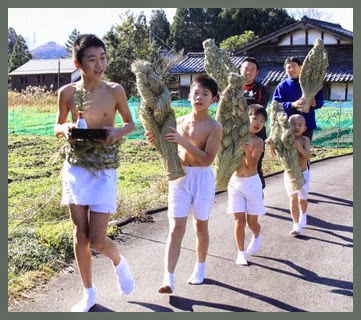
When a new home is built, the children all come together and run to the 大日堂 Hall of Dainichi, clad only in a loincloth (and nowadays white pants) and carrying thick ropes. At the Hall their leader puts a rope he had carried around his waist on the roots of the sacred 松の木 pine tree.


Then all the other kids put their シト / つと (shito) tsuto there. Then they all go into the hall and smear a special sacred paste made from rice, water and sake, called shitogi シトキ / しとぎ on their bodies. This act signifies to become a Jizo.
The Deity of the Mountains is seen of a "Monster of the Night" (yoru no mamono 夜の魔物).
This ceremony is supposed to appease him and keep the children safe.

- source : www.city.tsuruga.lg.jp

..............................................................................................................................................

- - - - - Fukushima 福島県

福島市 Fukushima

Kazafuki Jizoo son 風吹地蔵尊 Jizo from Kazafuki

The 16th day of the 3rd lunar month is the day of Jizo at the local temple. Already one week before the festival the impatient children from the local grammar school come here to play. During that time they are allowed to do anything they like with the Jizo.
On the "floating festival" day, Toonagashi トーナガシ, the water of the canal is stopped for a while, then the statue of Jizo, all naked, gets a rope around its head and is lowered into the water to let flow. The children have to pull the rope to hold it back.
Then one day someone washed the Jizo on the festival day and brought him to the shrine 神社. But after that his grandmother became ill and had to stay in bed.


..............................................................................................................................................

- - - - - Nara 奈良県

三宅町 Mitake

. oote kure Jizoo おうてくれ地蔵さん Carrying a Jizo piggyback .

..............................................................................................................................................

- - - - - Saitama 埼玉県

岩槻市 Iwatsuki

Once a samurai from 浦和市 Urawa got very drunk on sake.
He took his sword and cut off his nose, shouting "If Jizo has a soul 魂, he should now come here and show it to me"!
But after that misfortune happened constantly to his family. When the clan was almost at the end of its wits, they begun to offer rice to Jizo every year on the 24th day of the 7th lunar month.
The 24th day of each month is considered the ennichi 縁日 prayer day for Jizo.


..............................................................................................................................................

- - - - - Tochigi 栃木県

After a drinking party a drunk hunter once threw his hunting dog and a Jizo statue into the lake. The Jizo began to swim on the water, grabbed the poor dog and brought him back to the shore.


..............................................................................................................................................

- - - - - 和歌山県

みなべ町 Manabe

On the steep road in front of 嘉道地蔵さん Yoshimichi Jizo many people came to fall but nobody was ever injured. Jizo always picked them up and brought them back to the road safely.
Once a drunk old man on his bicycle fell into the river, but even he got away safely and without injuries.


::::::::::::::::::::::::::::::::::::::::::::::::::::::::::::::::::::::::::::::::::::::::::::::::::::::::::::::::::::::::::::::::::::::::::::::::::::::::::::::::::::::::::::::

- - - - - reference - - - - -

草取地蔵,オツナ地蔵
入山の地蔵,アメップリ地蔵
手なし地蔵,北向き地蔵
地蔵菩薩,夜泣地蔵
言成地蔵,(夢のお告げ),(祟り)
婆と石地蔵
子育て地蔵 . . and many more

yokai database 妖怪データベース - 01 / 595
- source : www.nichibun.ac.jp


Sake and Jizo 酒 (5)
- source : www.nichibun.ac.jp

::::::::::::::::::::::::::::::::::::::::::::::::::::::::::::::::::::::::::::::::::::::::::::::::::::::::::::::::::::::::::::::::::::::::::::::::::::::::::::::::::::::::::::::


. Join the Jizo Bosatsu Gallery - Facebook .


. Japanese Legends and Folktales .
- Introduction -


. Japan - Shrines and Temples - ABC .


[ . BACK to DARUMA MUSEUM . TOP . ]
[ . BACK to WORLDKIGO . TOP . ]
- - #gokurakujizolegends #jizolegends -
::::::::::::::::::::::::::::::::::::::::::::::::::::::::::::::::::::::::::::::::::::::::::::::::::::::::::::::::::::::::::::::::::::::::::::::::::::::::::::::::::::::::::::::

--
Posted By Gabi Greve to Gokuraku - Jigoku on 4/10/2015 02:22:00 p.m.